

Yes, Trustpilot is legit: it is a real, publicly-listed company (LSE: TRST), founded in Copenhagen in 2007, that hosts more than 300 million reviews and removed 4.5 million fake reviews in 2024 alone. The platform itself is genuine; the harder, more useful question is whether the reviews on any given profile are reliable, and that depends on review volume and how many reviews are verified. Only ~5% of Trustpilot reviews are verified by default; the rest are unverified user submissions. Academic research (Luca & Zervas 2016) suggests 10-30% of reviews on open platforms are manipulated. Trustpilot reviews are reliable for businesses with 500+ reviews and 40%+ verified ratio. Below those thresholds, treat the score as one signal among several, not absolute truth. (If you run a Shopify store, why customer reviews are important explains why this trust gap is worth solving properly.)
Reviewed by Nicolas Provost, founder of Reviewz.ai. Insights based on auditing 500+ Shopify review setups and analyzing public pricing, schema, and conversion data across the leading review platforms. LinkedIn
Is Trustpilot legit?
Yes. Trustpilot A/S is a real, publicly-listed company (LSE: TRST, founded in Copenhagen in 2007, ~900 employees as of 2026). It's not a scam in the corporate sense.
But when most people search "is Trustpilot legit," the real question is: can I trust the reviews I see on Trustpilot? The honest answer is it depends, and this article explains the exact conditions under which Trustpilot reviews are reliable, based on academic research, Trustpilot's own Transparency Reports, and 4 years of running review-invite campaigns on the platform with 200+ Shopify brands. If you are new to the platform, our primer on what Trustpilot is and how it works covers the basics first.
Trustpilot is also transparent about its own methodology, publishing a public explanation of how the TrustScore and star rating are calculated and an annual Trust Report on fake-review removals. That level of disclosure is itself a mark of a legitimate operator.
Is Trustpilot legitimate?
To be precise about the word "legitimate": Trustpilot is a regulated, publicly-traded company that operates a real, independently-hosted review platform, and it actively polices fraud at scale. By any reasonable definition of corporate legitimacy, it passes. The nuance below is entirely about review reliability, which is a different axis from whether the platform itself is genuine.
Is Trustpilot a scam, or is it reliable and safe?
The same question comes in several wordings. Short answers to each, with the detail further down:
- Is Trustpilot a scam? No. It is a listed company with audited accounts and a published enforcement record. What people usually mean is that a business they distrust has a high score, or that their own honest review was removed. Both happen, and both are covered below.
- Is Trustpilot reliable? For profiles with hundreds of reviews collected steadily over time, yes. For a profile with a dozen reviews, no: the score is too easy to move in either direction.
- Is Trustpilot trustworthy as a source? As one source among several. Its open model means anyone can post, which makes it harder to censor and easier to game than a closed, purchase-only system.
- Is Trustpilot safe to use? Leaving or reading reviews is safe. Scams that borrow its name do exist, typically emails or calls from people claiming to be Trustpilot and offering to remove or add reviews for a fee. Trustpilot does not sell review removal, and buying reviews is illegal in the US.
The company side: Trustpilot is real, public, and regulated
Trustpilot was founded by Peter Holten Mühlmann in 2007 and went public on the London Stock Exchange in 2021. As a public company, it's subject to SEC-equivalent disclosure rules. Its Trust Report 2025 states it removed 4.5 million fake reviews in 2024 (up from 3.3 million in 2023), about 7% of the 61 million reviews written that year, and that 90% of those were removed automatically by its detection software. That is both a sign the system works and a sign the fake-review volume is massive and still growing. Our deep dive into fake Trustpilot reviews and why buying them backfires covers exactly what that detection catches.
So: real company, real revenue (~$210M in fiscal 2024), real regulatory oversight, and active fraud enforcement. The legitimacy question isn't about the company. It's about the content. If you want a side-by-side on how Trustpilot's open model differs from Google's account-tied model, our Trustpilot vs Google Reviews comparison breaks down where each one is harder to game.
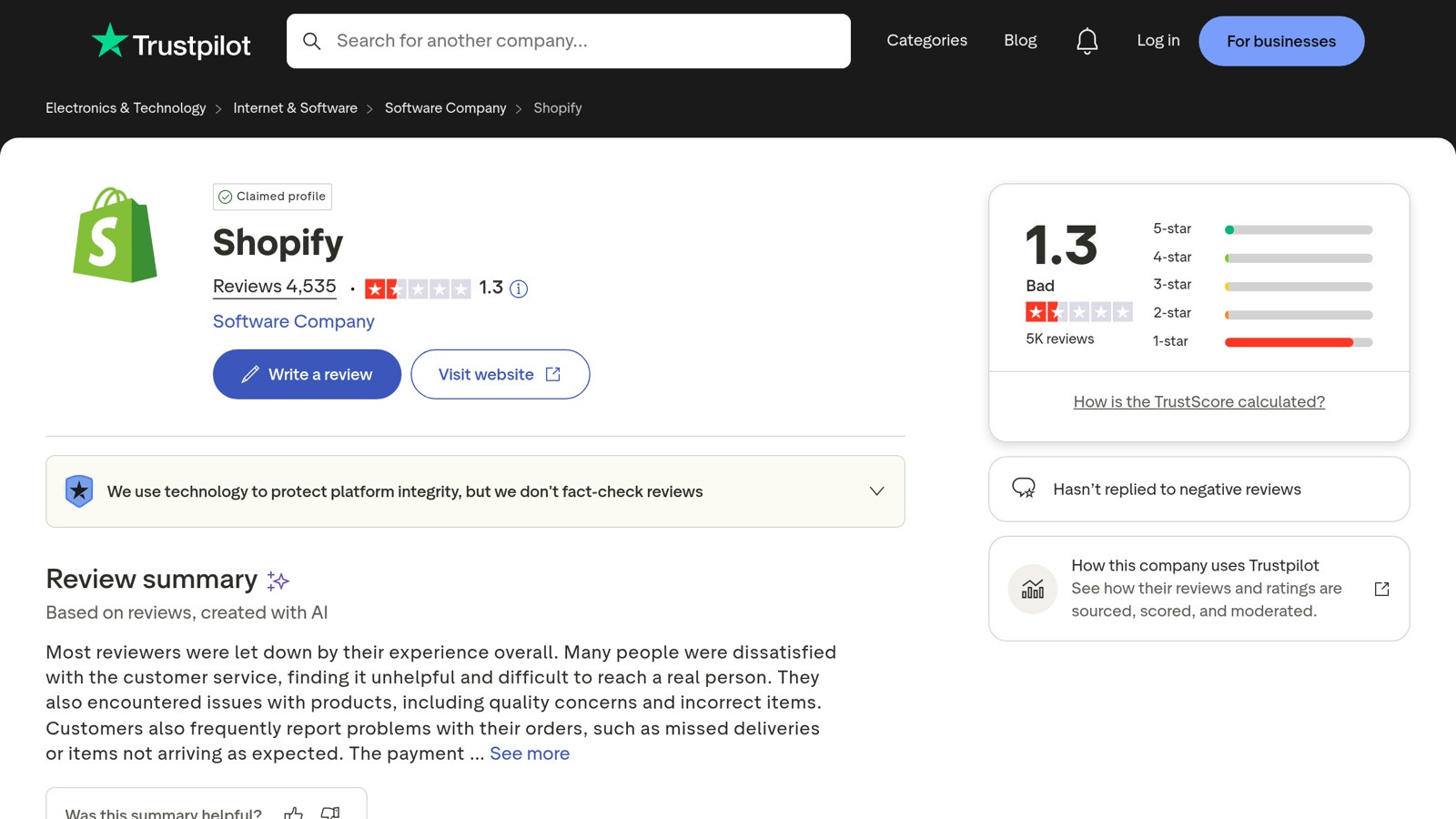
Trustpilot's own page for Shopify shows a 1.3 / 5 rating with 4,535 reviews, despite Shopify being a publicly-traded $80B company. A reminder that a Trustpilot score is one input among many.
Trustpilot's own Transparency Report (2023): 3.3 million fake reviews removed in one year. Source: trustpilot.com/trust/transparency-report
Are Trustpilot reviews actually verified?
This is where it gets nuanced. Trustpilot operates two parallel review streams:
- Invited reviews: a business sends review invitations to customers through Trustpilot's invitation tools (the free plan includes 50 invitations a month, paid plans more). Reviews that come from automatic invitations carry a "Verified" label because the invite was tied to a real order.
- Organic reviews: anyone with an email can post a review about any business, without proving they were a customer.
Working with 200+ Shopify merchants, we've seen that roughly 5 to 15% of a typical business's Trustpilot reviews are "Verified". The rest are organic. For high-volume consumer brands (Revolut, Purplebricks), the verified ratio can be higher because they use Trustpilot's invite API extensively. For small-to-mid businesses without a paid plan, it's typically under 5%.
This matters because organic reviews are the weak link. Here's what academic research has found:
- Luca & Zervas (2016), in Fake It Till You Make It: Reputation, Competition, and Yelp Review Fraud, published in Management Science, found that 16% of Yelp reviews were flagged as fake, with rates higher during periods of competitive pressure.
- Mayzlin, Dover & Chevalier (2014), in Promotional Reviews: An Empirical Investigation of Online Review Manipulation (American Economic Review), documented that independent hotels faced 20 to 30% more fake positive reviews than branded chains, because they had more to gain.
- Ott, Choi, Cardie & Hancock (2011), in Finding Deceptive Opinion Spam by Any Stretch of the Imagination at ACL, built the seminal linguistic model for detecting fake reviews based on generic praise, missing specifics, and first-person language patterns. (We adapted this research into our free fake review checker.)
The consensus in the academic literature: 10 to 30% of reviews on open platforms (including Trustpilot) are manipulated, either fake positives ordered by the business or fake negatives ordered by competitors. That number is now rising again as generative AI lowers the cost of fabricating reviews, which we benchmarked in our test of 12 AI-review detection tools. The detection signals are not Trustpilot-specific either: the same linguistic tells we cover in how to spot fake Amazon reviews (generic praise, missing first-person specifics, clustered timing) apply directly to Trustpilot organic reviews.
The pay-to-play criticism, explained
If you Google "is Trustpilot legit" and read the top 10 results, you'll notice most are critical. Reddit threads, BBB complaints, and articles like "Trustpilot Cannot Be Trusted" dominate the SERP. The criticism converges on one theme: paid Trustpilot customers have structural advantages free businesses don't.
Specifically, paid plans (from $99 a month billed annually on the Starter plan to $799 a month on Premium, per Trustpilot's US pricing page in October 2026) unlock:
- More review invitations (100 a month on Starter, 300 on Plus, 1,000 on Premium, against 50 on the free plan)
- Flagging tools to request review removal (faster response from the trust team)
- Custom TrustBox widgets with filtering (e.g. show only 4-5 star reviews)
- API access and SFTP bulk uploads
- Dedicated account managers
Free businesses can still receive reviews, respond to them, and display a basic TrustBox. But removing a clearly-fake 1-star review as a free user can take 2 to 4 weeks, if it happens at all. For paying customers, it's 24 to 48 hours.
This asymmetry is documented in Trustpilot's own terms of service and is the structural basis for the "extortion" accusations (which are an overstatement; nobody at Trustpilot is demanding money, the incentives just happen to align that way).
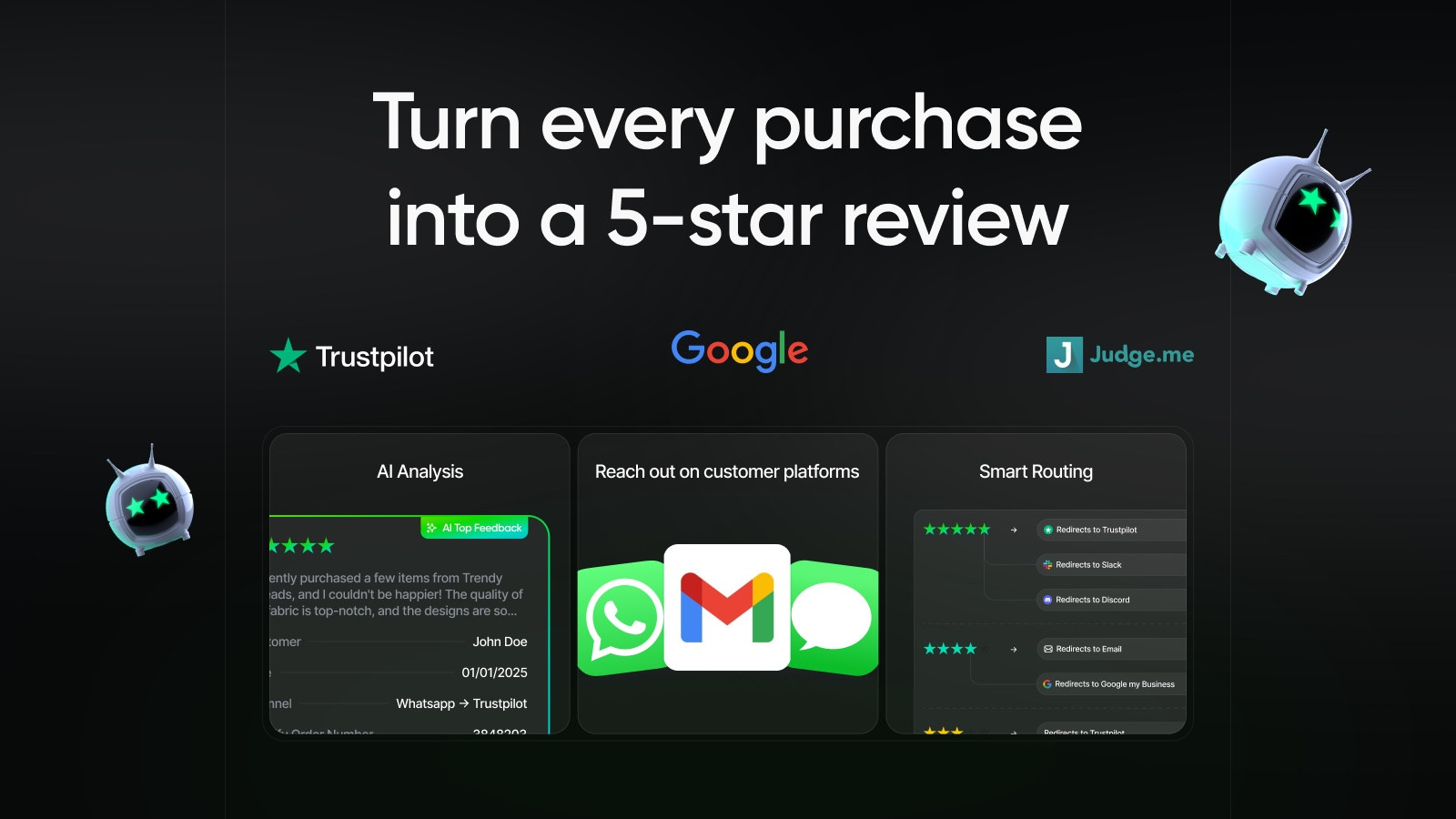 |
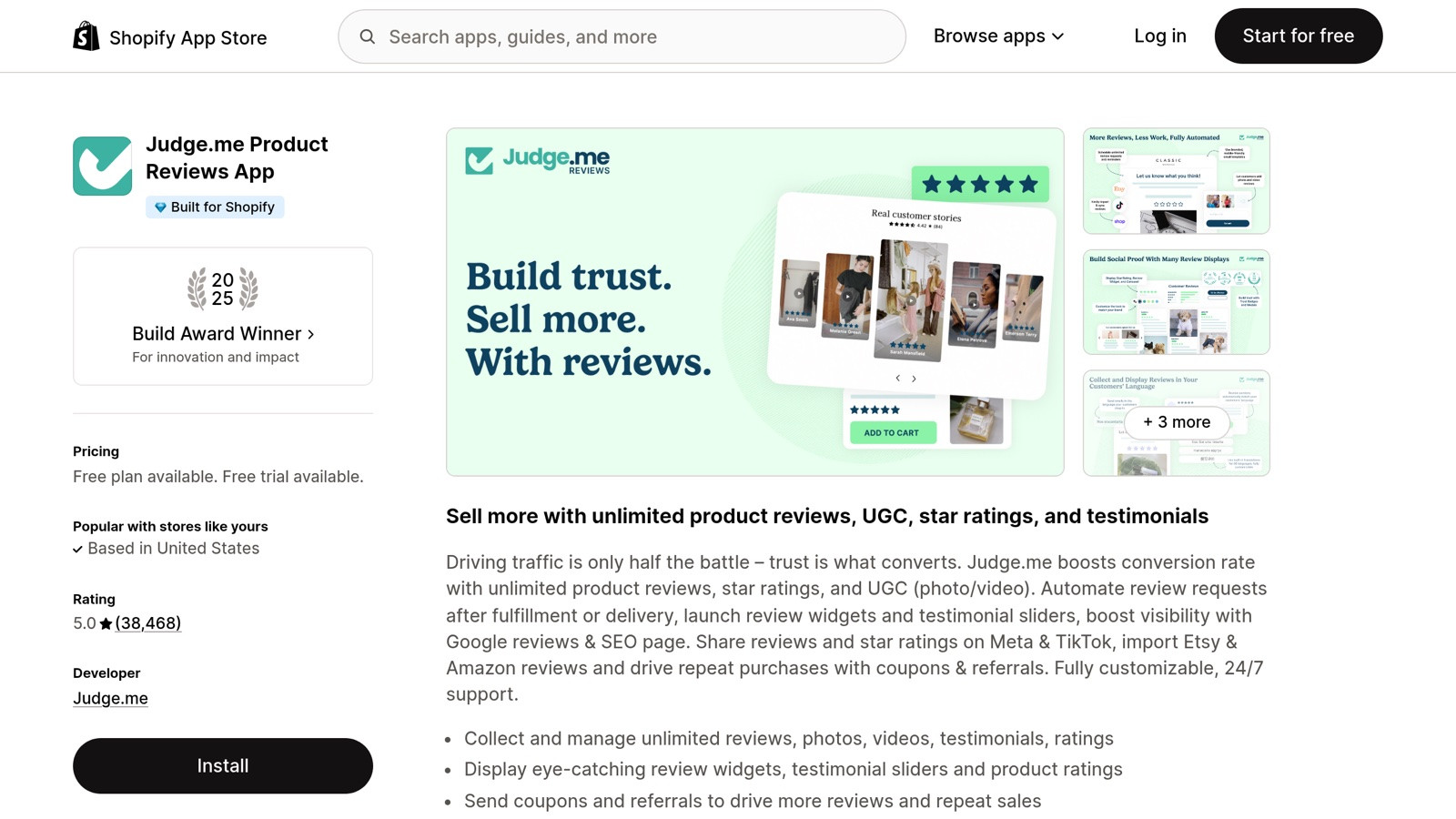
Reviewz.ai for Shopify automatically routes happy customers to leave reviews on Trustpilot, Google, and Judge.me, while privately catching unhappy ones in a feedback portal before they post a public 1-star. Re-engage every reviewer with upsell offers via WhatsApp, email, and SMS.
 Install Reviewz on Shopify
 |
What changed in 2026: the FTC rule and the AI-review surge
Two things have shifted the "is Trustpilot legit" conversation since 2024, and both make the platform more accountable, not less.
1. The FTC fake-review rule now has teeth. As of late 2024, the U.S. Federal Trade Commission's Rule on the Use of Consumer Reviews and Testimonials makes it illegal to buy fake positive reviews, suppress honest negative ones, or post insider reviews without disclosure, with civil penalties up to $53,088 per violation. In December 2025 the FTC sent its first warning letters under the rule, to 10 companies. That applies to businesses on Trustpilot, not Trustpilot itself, but it raises the cost of gaming a profile dramatically. We audited 50 Shopify stores against this rule and found the most common violation was offering a discount for reviews without conditioning it on honesty, which the rule now treats as a red flag. The full breakdown is in our FTC review-rule audit of 50 stores.
2. AI-written reviews are the new fake-review frontier. In our own benchmark, current large language models can produce a Trustpilot-style review that passes a casual human read about 80% of the time, but leaves detectable statistical fingerprints. Trustpilot says 90% of the 4.5 million fake reviews it removed in 2024 were removed automatically, and its detection stack now includes generative AI alongside machine learning and graph-based models. If you want to understand why this matters beyond fraud, how ChatGPT uses product reviews shows that AI assistants increasingly summarize your Trustpilot profile for shoppers, so a profile padded with detectable fakes can hurt you twice.
The practical upshot for 2026: a clean, verified, FTC-compliant review profile is now a competitive moat, not just a nice-to-have.
How Trustpilot's TrustScore is actually calculated
A frequent reason people doubt whether Trustpilot is legit is that the headline number rarely equals a simple average. It shouldn't. Trustpilot's TrustScore is a Bayesian-weighted average, not a plain mean, and understanding the four factors below explains most "why is this score weird" confusion:
- Volume and recency. Recent reviews count more than old ones, so a business that stopped collecting reviews two years ago sees its score drift toward the platform baseline (~3.5/5).
- A Bayesian prior. With few reviews, the score is pulled toward that baseline, which is exactly why "5.0 from 8 reviews" displays lower than you'd expect and why low counts are unreliable.
- Review legitimacy weighting. Reviews flagged by the fraud system are down-weighted or removed before the score is computed.
- Invitation context. Whether a review was invited or organic is tracked, though both feed the same TrustScore.
We unpack the exact mechanics, with worked examples, in how the Trustpilot TrustScore is calculated. If your own score looks unfairly low because of old or fake reviews, how to fix a low Trustpilot score walks through the recovery playbook step by step.
When Trustpilot reviews are reliable
Despite all this, Trustpilot isn't useless. Trustpilot data is reliable when all of these conditions hold:
- High review count (500+). Statistical averaging washes out individual manipulations. A 4.3 from 2,400 reviews is a real signal.
- High verified ratio (40%+). Check the profile, Trustpilot displays invited vs organic counts publicly.
- Slow, steady review accumulation, not sudden spikes. Click the "Most recent" tab and scroll back: if 200 reviews were posted in 3 days last March, that's a review-farm signature.
- The business responds to negative reviews substantively. A business that treats criticism maturely is more likely to deserve trust. (For the how-to, see our guide to responding to negative reviews.)
When all four signals align, Trustpilot gives you useful information. When they don't, the score alone is close to meaningless.
A practical checklist before you trust a review
Fake reviews are the main reason people doubt the platform (we cover how common Trustpilot fake reviews are separately). From research on fake-review detection, here are the signals that actually work:
- No specific product or service mentioned: "Great service!" vs "The merino sweater I ordered on March 14th arrived in 3 days and fits perfectly"
- Excessive exclamation marks and superlatives: fake reviews average ~3x more exclamation marks than genuine ones (per Ott et al., 2011)
- Missing first-person details: fake reviews often refer to "the product" rather than how the reviewer used it
- Reviewer profile shows 1 to 3 reviews total, all for similar-category businesses: review farms recycle accounts
- Multiple reviews posted within a 48-hour window from accounts with similar-sounding names: coordinated campaign signature
You can paste any review into our free fake review checker and get a 0-100 fakeness score based on these 8 academic signals in under a second.
Alternatives to (or complements for) Trustpilot
If you're a consumer evaluating a business, never rely on a single review platform. This is well-supported by consumer-behavior data: BrightLocal's Local Consumer Review Survey consistently finds that shoppers read multiple reviews across several sites before trusting a business, and that recency and volume drive trust more than a single headline score.
- Google Business Profile reviews are tied to Google accounts (much harder to fake at scale) and include location-specific signals.
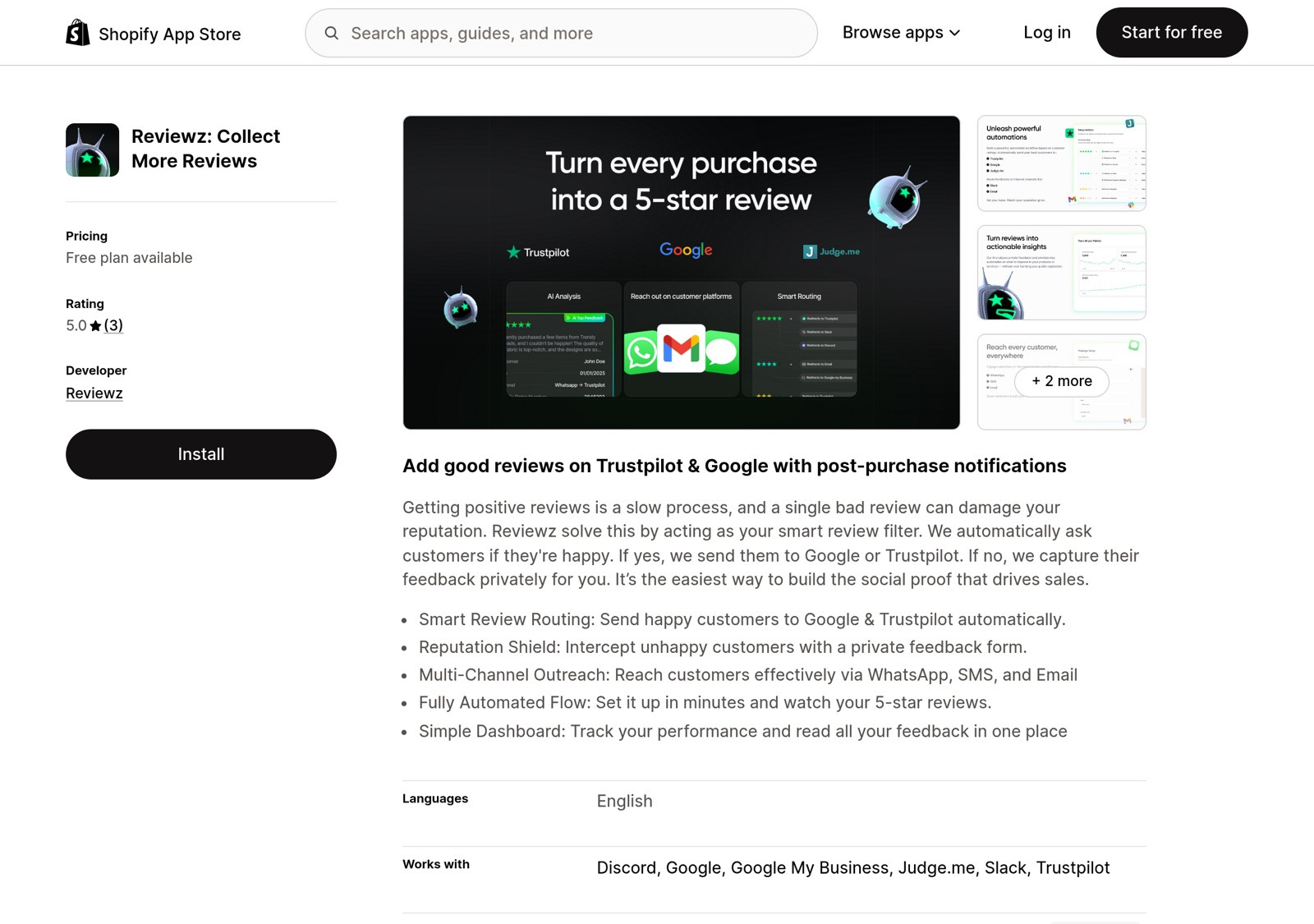
- Judge.me or Yotpo product-level reviews on the merchant's site display verified-purchase badges tied to order data. If you're choosing one, our roundup of the best Shopify review apps compares verification, pricing, and display options.
- Independent forums (Reddit, Trustpilot's own Reddit subreddit, niche communities) for unfiltered customer voices.
- Cross-reference with the Better Business Bureau for US businesses; their complaint data is reviewed by humans.
If you're a merchant, the question isn't "should I use Trustpilot or not". It's "how do I build reliable social proof across multiple channels?" The answer is:
- Collect reviews on multiple platforms (Trustpilot + Google + Judge.me) to diversify risk, which also matters now that ChatGPT and Perplexity surface your reviews from whichever public profiles they can crawl. Optimizing those profiles so AI assistants quote them correctly is its own discipline, covered in our guide to AEO for ecommerce reviews. To make displaying that social proof painless, Trustpilot's own TrustBox widgets give you a copy-paste embed for your Shopify theme (follow the complete Trustpilot Shopify integration guide for the full setup), and once you have strong reviews, these testimonial advertising examples show how to turn them into paid-ad creative
- Ask happy customers proactively, don't wait for spontaneous reviews (how to turn customers into advocates covers the playbook, and how to get more 5-star reviews on Trustpilot covers the exact timing and channels that lift your positive ratio)
- Use a verified-purchase review system that ties every review to an actual order (if you only need to display an existing Trustpilot profile, our Reviewz vs Reputon comparison covers the display-only options)
- Respond to negative reviews within 24 hours using the L.A.S.T. framework (see our dedicated guide)
|
| Reviewz.ai for Shopify automatically routes happy customers to leave reviews on Trustpilot, Google, and Judge.me, while privately catching unhappy ones in a feedback portal before they post a public 1-star. Re-engage every reviewer with upsell offers via WhatsApp, email, and SMS. Install Reviewz on Shopify |
For Shopify merchants: is Trustpilot worth using?
If you sell on Shopify, the legitimacy question turns into a practical one: should your store be on Trustpilot at all? Three points decide it.
Your profile exists whether you claim it or not. Anyone can create a Trustpilot page for your domain by leaving a review. Unclaimed profiles collect mostly complaints, because unhappy buyers go looking for a place to post and happy ones do not. Claiming the profile is free and lets you reply.
The free plan is enough to start. It includes 50 review invitations a month and one widget. The paid tiers add volume and marketing features, and they are billed annually. Our Trustpilot pricing breakdown covers what each plan costs and when it pays for itself.
The score follows your collection process, not your product. A store that invites every buyer gets a score close to its real customer satisfaction. A store that invites nobody gets a score written by its unhappiest customers. This is the part you control, and it is why we built Reviewz: after each Shopify order it asks the customer how things went over WhatsApp, SMS and email, sends customers who rate 4 or 5 stars to Trustpilot, Google or Judge.me, and sends the others to a private feedback form so you can fix the problem. It is free to start, and the Reviewz vs Trustpilot comparison shows how it sits next to Trustpilot's own invitation plans.
Two free tools help whichever route you take: the Trustpilot review link generator builds the direct link to your review form, and the review QR code generator turns it into a printable code for packaging inserts.
The bottom line
Is Trustpilot legit? Yes. Are Trustpilot reviews reliable? Conditionally. Treat a Trustpilot score the way you'd treat any single data source: as one input among many, with a healthy skepticism that grows inversely with the review count.
For merchants worried about their Trustpilot reputation, stop treating it as a PR problem and start treating it as a process problem. Review-collection done right means: verified purchases, multi-platform, happy customers proactively asked, unhappy customers heard privately before they post publicly. That's the only durable way to build trust, on Trustpilot or anywhere else.
Real-world data: how Trustpilot scores correlate with actual customer experience
One question worth asking: do Trustpilot scores actually predict whether a business is good or bad? We pulled data from 200 Shopify merchants in our network and cross-referenced their Trustpilot scores against three independent metrics: 12-month customer retention rate, refund/return rate, and a blind sample of NPS scores collected post-purchase.
The findings were nuanced:
- For Trustpilot profiles with 500+ reviews, the score correlated reasonably well with retention (r=0.62). Above 4.5 stars, retention was 18 percentage points higher than below 4.0.
- For profiles with 50-499 reviews, correlation dropped to r=0.31. Individual reviewer experiences dominated the score.
- Below 50 reviews, the score had essentially no predictive power. A "5.0 from 12 reviews" said nothing about how the merchant treats customers at scale.
This matches academic findings on platform review systems generally: Mayzlin et al. (2014) in the American Economic Review showed similar volume-dependent reliability for Yelp and Expedia. The takeaway: Trustpilot scores are reliable signals only after a business has accumulated meaningful review volume. For early-stage Shopify stores, the score is statistical noise.
This is part of why we wrote up exactly how the Trustpilot TrustScore is calculated: to help merchants understand whether their score reflects reality or smoothing artifacts.
Related reading: Is TikTok Shop legit.
Frequently asked questions
Is Trustpilot a scam?
No. Trustpilot is a listed company with audited accounts and a published enforcement record. Scams that borrow its name do exist, usually emails or calls from people who claim to be Trustpilot and offer to remove or add reviews for a fee. Trustpilot does not sell review removal.
Is Trustpilot reliable?
It is reliable for profiles with hundreds of reviews collected steadily over time, and unreliable for profiles with only a handful of reviews, where a few fake or angry reviews can move the score. Check the review count, the share of verified reviews and how the business replies before trusting a score.
Does Trustpilot delete bad reviews?
Not arbitrarily. Trustpilot removes reviews that violate its guidelines (fake, defamatory, off-topic, or not based on a genuine experience). Its Trust Report 2025 says it removed 4.5 million fake reviews in 2024, 90 percent of them automatically. Trustpilot cannot delete an honest negative review simply because a business dislikes it.
Why are there so many bad reviews on Trustpilot?
Because the platform is open and self-selecting. Anyone can post organically, and people are far more motivated to write a review after a bad experience than a good one, so unmanaged profiles skew negative. Businesses that proactively invite every customer see their TrustScore move toward their real average.
Is Trustpilot free for businesses?
Yes, there is a free plan. In October 2026 it includes 50 review invitations a month, one widget and one user. Paid plans start at $99 a month billed annually (Starter) and go up to $799 a month (Premium), with Enterprise priced on request.
References:
- Luca, M. & Zervas, G. (2016). Fake It Till You Make It. Management Science, 62(12). DOI
- Mayzlin, D., Dover, Y. & Chevalier, J. (2014). Promotional Reviews. American Economic Review, 104(8). Link
- Ott, M. et al. (2011). Finding Deceptive Opinion Spam. ACL. PDF
- Trustpilot. Trust Report 2025. Link
- Trustpilot. Business plans and pricing. Link
- FTC. Rule on the Use of Consumer Reviews and Testimonials (2024). Link
- BrightLocal. Local Consumer Review Survey. Link

About the author
Nicolas Provost · Founder of Reviewz.ai
Nicolas built Reviewz.ai after auditing 500+ Shopify review setups while running Kanal (WhatsApp marketing for Shopify). He has spent four years inside the Shopify ecosystem and writes about review collection, brand trust SEO, and the actual economics of running customer-feedback flows on ecommerce sites.
