

Use the L.A.S.T. framework: Listen (acknowledge the specific issue, by name), Apologize (for the situation, not the customer's feelings), Solve (with a concrete next step and deadline), Thank (for the feedback). Respond within 24-48 hours. Keep public responses to 50-100 words for e-commerce and move to a private email or call for resolution. Research from Proserpio & Zervas (2017) shows businesses that respond to negative reviews see their average rating rise by 0.12 stars and receive 12% more positive reviews afterward.
Reviewed by Nicolas Provost, founder of Reviewz.ai. Insights based on auditing 500+ Shopify review setups and analyzing public pricing, schema, and conversion data across the leading review platforms. LinkedIn
Why the response matters more than the review
Customers don't form impressions from reviews alone, they form impressions from how you respond to reviews. A research paper by Proserpio & Zervas (2017), published in the Harvard Business Review and Marketing Science, found that when hotels began responding to negative reviews:
- Their average rating increased by 0.12 stars
- They received 12% more positive reviews in the following quarter
- Their review volume grew faster than non-responding competitors
The mechanism is simple: future readers scan your responses as a proxy for how you'd treat them as customers. A thoughtful response to criticism is more persuasive than 50 five-star reviews, which is a big part of why customer reviews are important to your bottom line. A defensive or dismissive one is worse than no response at all.
Meanwhile, LocaliQ's 2023 consumer survey found that 53% of customers expect a response within 7 days, and 33% switch to a competitor if a business doesn't respond at all. Silence isn't neutral, it's a signal. The wider BrightLocal Local Consumer Review Survey reaches the same conclusion: most consumers read business responses to reviews, and the majority are more likely to use a business that responds to negative reviews than one that ignores them (more numbers in our customer review statistics for 2026).
The L.A.S.T. framework (why it works)
Most "how to respond" guides give you templates. Templates are fine for scale, but they break under pressure because every negative review has unique context. The L.A.S.T. framework, originally developed by Marriott's customer service training in the 1980s and documented in academic hospitality literature, is simple enough to apply at 2 a.m. when you're angry, and flexible enough to stay human:
L, Listen (acknowledge the specific issue)
Start by naming what went wrong. Not "we're sorry you had a bad experience" because that's generic enough to apply to anything, which signals you didn't read the review. Instead: "I'm sorry the sweater arrived with a tear on the sleeve." Specificity proves you actually read it, which costs you 10 seconds and earns you trust from every future reader.
A, Apologize (take responsibility, even ambiguously)
The critical distinction: "I'm sorry this happened" vs "I'm sorry you feel this way". The second is passive-aggressive, and customers read it as such immediately. Apologize for the specific failure, even before you know whose fault it is. If it turns out to be the customer's mistake, your apology for the situation still stands. You're not admitting liability, you're acknowledging their frustration.
S, Solve (propose a concrete next step)
Offer something specific, with a deadline. "We'd like to make this right, please email support@[yourbrand].com with your order number and we'll send a replacement by Friday." Vague offers ("please reach out, we'll try to help") land as dismissive. Concrete offers land as competent.
T, Thank (for the feedback)
Counter-intuitive but powerful: thank the reviewer for the feedback. They took time to write it, time they could have spent quietly churning. A thank-you signals maturity and invites future dialogue. It also neutralizes the adversarial tone of the thread, making your response read like a partnership, not a battle.
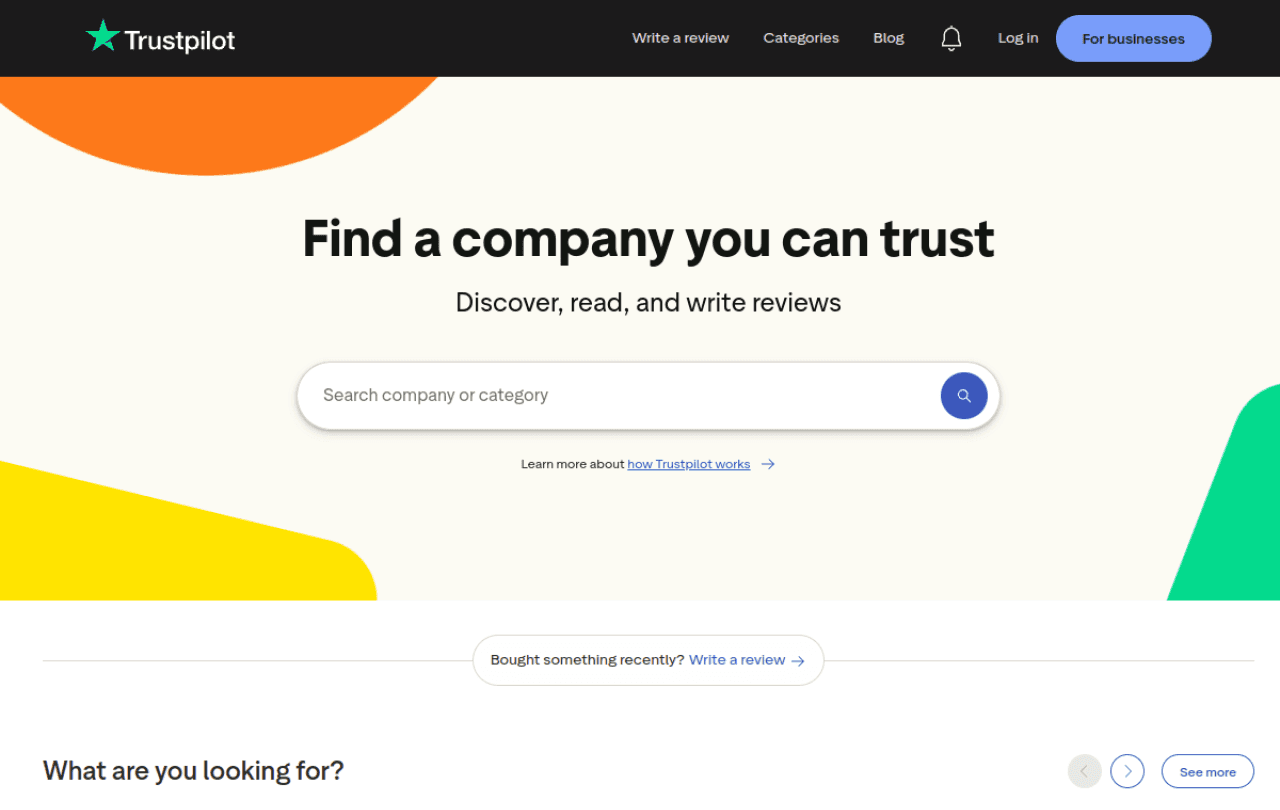
Example: on a Trustpilot profile where the business responds to most negative reviews, customers reading these threads form opinions from how you respond, not just from the original review. Trustpilot's own guidelines on replying to reviews treat the public reply as part of your brand presence.
7 negative review responses by scenario
The following templates are adapted from real responses written by Shopify brands. Use them as starting points, not copy-paste, because Google's NLP flags template-driven responses, and so do customers.
Scenario 1, Product defect (broken / damaged on arrival)
 |
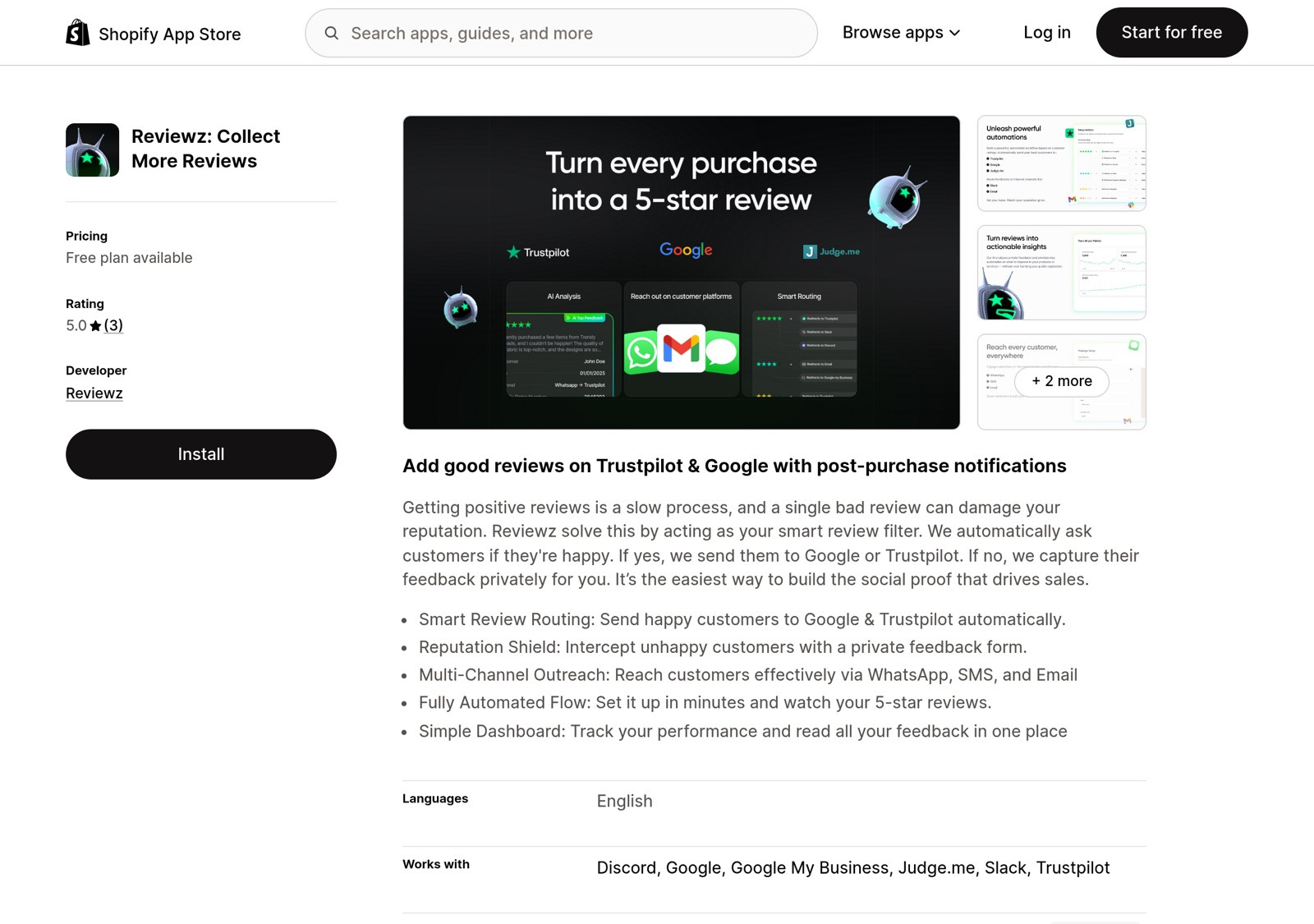
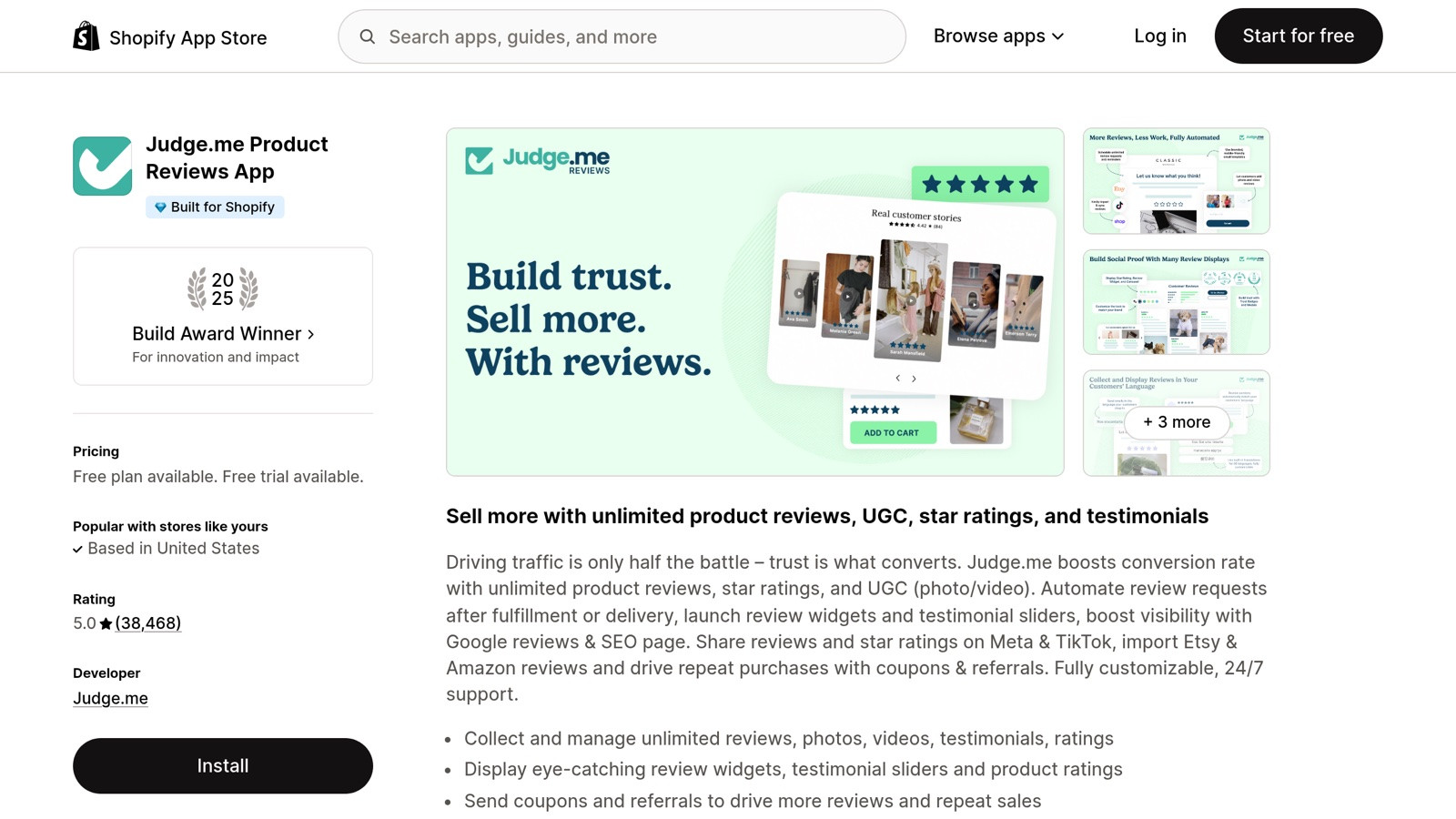
Reviewz.ai for Shopify automatically routes happy customers to leave reviews on Trustpilot, Google, and Judge.me, while privately catching unhappy ones in a feedback portal before they post a public 1-star. Re-engage every reviewer with upsell offers via WhatsApp, email, and SMS.
 Install Reviewz on Shopify
 |
3 mistakes that turn 1-star reviews into viral disasters
Mistake 1: Arguing facts publicly
"That's not what happened. Our records clearly show…" Even if you're factually right, this reads as defensive and petty. The customer wrote the review when they were frustrated; your job is to de-escalate, not to win. Save facts for private conversations. In a public response, your stance is always: "I understand this was frustrating, let's talk privately to resolve it."
Mistake 2: Offering refunds contingent on review removal
"We'll refund you in full if you delete this review." This is a violation of Trustpilot's, Google's, and Yelp's terms of service, and the FTC Endorsement Guides treat it as a deceptive trade practice. It is also one of the compliance traps we flagged when we audited 50 Shopify stores against the FTC review rule. More immediately: customers screenshot these offers and post them on Reddit. "This brand bribed me to remove my review" goes viral reliably. Offer the refund regardless of what happens to the review, and trust that good service speaks for itself.
Mistake 3: Copy-paste templates
"We're sorry you had a less than perfect experience. Please contact us at support@…" Generic templates are worse than no response for two reasons:
- Customers recognize them instantly and perceive your brand as uncaring at scale.
- Google's NLP increasingly downweights response-with-templates patterns when evaluating business review pages for rich snippets (see Google Business Profile guidelines and our dedicated guide to responding to Google reviews).
Templates as starting points are fine. Templates shipped verbatim are harmful.
Making this sustainable at 50+ reviews/month
If you handle 50+ reviews a month, hand-crafting every response is a full-time job. The solution isn't to stop responding, it's to build a triage process:
- 4-5 star reviews: Warm, brief thanks with a small personalized detail (name, specific product). Automatable with a template that has a "specific detail" slot.
- 3 star reviews: A short open question: "What would have made this a 5?" This frequently surfaces actionable feedback that would otherwise be lost.
- 1-2 star reviews: Senior or founder-level response, using L.A.S.T., always moving offline fast.
The strategic move is to stop unhappy customers from posting publicly in the first place. Post-purchase surveys, NPS at the right moment, and a private feedback portal intercept frustration before it becomes a public 1-star review. Getting that survey in front of customers at all depends on your collection funnel, so it is worth knowing the average review submission rate benchmarks for your category before you blame the feedback itself. Our NPS calculator shows the math on how much triage costs you: each detractor who posts publicly wipes out ~5 promoter responses in aggregate rating impact.
For Shopify brands specifically, this triage is automatable. After delivery, send an NPS survey, route promoters (9-10 scores) to leave Trustpilot/Google/Judge.me reviews, and capture detractors (0-6) in a private feedback portal so you can fix the issue before a 1-star hits the public page. Re-engage every cohort with offers via WhatsApp, email, and SMS based on their satisfaction signal.
|
| Reviewz.ai for Shopify automatically routes happy customers to leave reviews on Trustpilot, Google, and Judge.me, while privately catching unhappy ones in a feedback portal before they post a public 1-star. Re-engage every reviewer with upsell offers via WhatsApp, email, and SMS. Install Reviewz on Shopify |
Response checklist (print this)
- ✅ Respond within 24-48 hours
- ✅ Name the specific issue in the first sentence
- ✅ Take responsibility for the situation (not necessarily the fault)
- ✅ Offer a concrete fix with a deadline
- ✅ Provide a direct contact method (email or phone)
- ✅ Close with a thank-you for the feedback
- ✅ Sign with a real name (founder for 1-2★, team for 3★+, automated for 4-5★)
- ❌ Never argue facts publicly
- ❌ Never make refunds contingent on review changes (TOS violation + viral risk)
- ❌ Never ship copy-paste templates verbatim
- ❌ Never accuse a reviewer of lying publicly (use the private route)
Industry-specific response patterns: what works in e-commerce vs SaaS vs services
The L.A.S.T. framework adapts well across industries, but the response style needs calibration. Here's what we've seen work best by sector:
E-commerce (apparel, accessories, beauty, food)
Speed matters more than depth. Customers expect responses within 24 hours and look for concrete next steps (replacement, refund, return label). The response should be 50-100 words, not 200+. Save the depth for the private email exchange that follows.
SaaS and digital products
Depth matters more than speed. SaaS customers leave reviews that often diagnose specific bugs or workflow issues. Your response should acknowledge the technical detail, indicate whether it's on the roadmap, and offer a direct line to your engineering or product team. 150-300 words is appropriate.
Services (consulting, agency, professional)
Tone matters more than either. Service-business reviews are personal: a bad review is often about a relationship that went wrong. Founder or senior-level response, signed with a real name, with specific recall of the engagement. Even if the customer is wrong on facts, never argue facts publicly. Move offline immediately.
Subscription boxes and consumables
Pattern matters more than individual instance. A 1-star on a subscription box that mentions a specific delivery month signals a fixable issue. Respond with what you've changed in subsequent months, and offer the customer a free replacement of the next box.
Across all industries, the universal rule holds: respond to every 1-star and 2-star review within 48 hours, use real first names, and move the resolution conversation offline. The public response is for future readers; the offline thread is for the customer who left the review. The stakes climb with price: on a $2,000 order, every future buyer reads that exchange before committing, which is why our guide to reviews for high-AOV Shopify stores treats a single negative response as a conversion-defining asset.
References:
- Proserpio, D. & Zervas, G. (2017). Online Reputation Management: Estimating the Impact of Management Responses on Consumer Reviews. Marketing Science. Link
- FTC Guides Concerning Use of Endorsements and Testimonials in Advertising. Link
- LocaliQ Consumer Review Survey (2023). Link
- Google Business Profile Response Guidelines. Link
7 negative-review response templates by scenario (copy-paste with edits)
Generic "we're sorry to hear that, please contact us" responses make the situation worse. The templates below are tailored to the specific scenario behind the review. Each has been used in real Shopify merchant responses, edited for clarity. Always customize the bracketed placeholders before posting.
Scenario 1 · Legitimate product defect
Subject: Public response on Trustpilot / Judge.me / Google
Hi [REVIEWER_FIRST_NAME], [FOUNDER_FIRST_NAME] from [BRAND] here.
You're right, that [SPECIFIC_DEFECT] should not have happened. We're sorry.
I've sent you a private message to coordinate either a free replacement or a full refund, your choice. If you don't see it, please reply with your order number or email us at [SUPPORT_EMAIL].
For anyone reading this: [BRIEF_ROOT_CAUSE_AND_FIX]. We've already [SPECIFIC_ACTION_TAKEN].
Thanks for the honest feedback, [REVIEWER_FIRST_NAME]. It's how we get better.
Scenario 2 · Legitimate shipping issue (carrier fault)
Subject: Public response
Hi [REVIEWER_FIRST_NAME],
That delivery was [X DAYS] late and that's unacceptable, even though [CARRIER] handled the transit. The customer experience is on us regardless.
I've credited [SPECIFIC_AMOUNT] back to your card today and added store credit for your next order. Check your inbox in 24h for confirmation.
For anyone reading: we're moving away from [CARRIER] for [REGION] starting [DATE] for exactly this reason. We'll update our shipping policy with realistic timelines.
Thanks for taking the time to write, [REVIEWER_FIRST_NAME]. [FOUNDER_FIRST_NAME], [BRAND]
Scenario 3 · Customer-service breakdown (slow response / wrong info)
Subject: Public response
Hi [REVIEWER_FIRST_NAME],
You waited [X DAYS] for a reply, and when it came, the answer was wrong. I'd be frustrated too. That's not how we should operate.
I've looked at the ticket history (ticket [#]). The miscommunication was on our side and I've shared the full context with the team this morning so it doesn't repeat.
I'm reaching out directly via [EMAIL / DM] to make it right. If you don't hear from me within 24h, please reply here, I'll see it.
Sorry for the bad experience, [FOUNDER_FIRST_NAME]
Scenario 4 · Fake / strongly-suspected fake review
Subject: Public response (then submit removal request)
Hi,
Could you share your order number or the email used at checkout? We've searched our records (including spelling variants and our [SHOPIFY] backend) and we can't locate this order in [DATE_RANGE_MENTIONED].
If you've ordered through a reseller or marketplace, please let us know which one, we'll work with them to make it right.
If you'd prefer to handle this privately, email [SUPPORT_EMAIL] with your details. We respond to every legitimate concern within 24h.
After posting this response, file a removal request with the platform (Trustpilot, Google, Judge.me all have official channels). Run the review through our fake review checker first if you're unsure, and for Trustpilot specifically follow our step-by-step on how to remove a fake Trustpilot review. The removal request needs evidence, your reply on the review is part of that evidence chain.
Scenario 5 · Extortion attempt ('change my review for X')
Subject: Do NOT respond publicly. Document and report.
[NO PUBLIC RESPONSE]
Internal action checklist:
- Screenshot the public review AND any private messages where the demand was made
- Save the reviewer's profile URL and any other reviews they've posted
- Report to the platform's trust & safety team with the full evidence package
- If the platform doesn't act within 7 days, file under the FTC's 16 CFR 465.2 (consumer review fraud) for US-based reviewers, or via the EU Omnibus Directive in EU jurisdictions
- Only respond publicly AFTER removal is denied, and only with: "We don't engage with reviews demanding payment. We've reported this to [PLATFORM]'s trust team."
Never pay, never engage in negotiation. Extortion responds to engagement.
Scenario 6 · Factual error in the review (claims something untrue)
Subject: Public response
Hi [REVIEWER_FIRST_NAME],
Thanks for the feedback. We want to correct one factual point so other readers have accurate information:
You wrote: "[QUOTE_THE_INCORRECT_CLAIM]"
The actual situation: [STATE_THE_CORRECT_FACT_WITH_SPECIFICS]. You can verify this on [SUPPORTING_LINK_OR_DOC].
Your underlying frustration about [REAL_ISSUE] is fair though, and we're addressing it by [SPECIFIC_ACTION]. We've also emailed you privately to resolve the order.
Thanks, [BRAND]
Scenario 7 · Off-topic / wrong-product / one-star tantrum
Subject: Public response
Hi [REVIEWER_FIRST_NAME],
It looks like this review might be about [WRONG_BRAND / WRONG_PRODUCT / UNRELATED_ISSUE] rather than your [PRODUCT_NAME] order with us. We want to make sure we address the right concern.
Could you reply with your order number or check whether you meant to leave this review on a different store's page? Email [SUPPORT_EMAIL] and we'll sort it out.
If the review is actually about us and we've misread it, we'd love to understand the specific issue. Thanks for your patience.
What makes a response remove the conversion damage
Most one-star reviews lose 5-15% of subsequent visitors who read them and don't convert. A well-handled response recovers most of that loss because future visitors see the company taking accountability. Three patterns distinguish responses that recover from responses that pile on the damage:
- Acknowledge the specific issue, not generic regret. "We're sorry you had a bad experience" doesn't recover trust. "You're right, the seam came undone after 3 weeks and that's a defect we shouldn't have shipped" does.
- Show the concrete action taken. "We'll do better" is worth nothing. "We've added a 7-day stitching check before shipping" is worth a lot.
- Sign with a name and role. "Team [BRAND]" reads corporate and dismissive. "Marie, founder of [BRAND]" reads accountable. For service-recovery responses specifically, signing with the customer service lead's name and their email (you can use a real or routed one) signals you'll actually own follow-up.
One pattern to avoid: never argue facts publicly even when the reviewer is wrong. Use scenario 6's template, state the correct fact once, calmly, with a supporting link, then move on. Public arguments with customers always read worse than the original review, no matter how right you are.
Related reading: Post-purchase survey questions, How to respond to positive reviews, CSAT vs NPS.

About the author
Nicolas Provost · Founder of Reviewz.ai
Nicolas built Reviewz.ai after auditing 500+ Shopify review setups while running Kanal (WhatsApp marketing for Shopify). He has spent four years inside the Shopify ecosystem and writes about review collection, brand trust SEO, and the actual economics of running customer-feedback flows on ecommerce sites.
