
Judge.me wins on raw cost, Loox wins on photo reviews, Okendo wins on premium UGC, and Reviewz.ai wins on routing happy customers to Trustpilot and Google. We applied a 90-day comparison framework to 7 Shopify review apps using public pricing, public store deployments, schema audits and synthetic submission tests on a 1,200-order baseline. Yotpo is overpriced under $30k MRR. Stamped is fine but boring. Reviews.io is the wildcard. Full numbers, methodology limits, and category winners below.
Reviewed by Nicolas Provost, founder of Reviewz.ai. Insights based on auditing 500+ Shopify review setups and analyzing public pricing, schema, and conversion data across the leading review platforms. LinkedIn
Why we ran this comparison (and what it actually is)
Every Shopify merchant has read the same five blog posts about review apps. They all rank Judge.me first because it has a generous free tier, Yotpo last because it has shouty sales reps, and Loox somewhere in the middle. Useful, but lazy.
We wanted numbers tied to outcomes a merchant actually cares about: how many post-purchase emails turn into published reviews, how much the app slows down your product pages, how much you actually pay over a year, and how the schema markup affects rich snippets. So we built a 90-day comparison framework across 7 apps: Judge.me, Yotpo, Loox, Stamped, Okendo, Reviews.io, and our own Reviewz.ai.
Honest disclosure right up top: this is not a fully controlled A/B test. We did not install all 7 apps on 7 identical stores for 90 days. What we did is apply a structured comparison framework using (a) public pricing pages as of April 2026, (b) public schema audits on 30 live Shopify stores per app via Google's Rich Results Test, (c) public PageSpeed Insights scores on 10 product pages per app, (d) submission-rate benchmarks gathered from merchant case studies and our own client base, and (e) support response tests with three new tickets per app, sent at randomized times. The methodology limitations section at the bottom is the most important paragraph in this article.
The methodology in detail
Each app was scored on 5 dimensions, weighted to reflect what matters to a sub-$5M Shopify store:
1. Submission rate (35%): the share of post-purchase review requests that become a published review. We used a baseline of 1,200 fulfilled orders per app, modeled from the average review submission rates reported in vendor case studies and confirmed with 12 of our own clients running each app over the last 18 months.
2. Page-speed impact (25%): we audited 10 live product pages per app using PageSpeed Insights, comparing the median LCP, total blocking time and JS payload size. Stores were sampled from the Shopify App Store reviews tab to ensure they were active users, not abandoned installs.
3. Schema coverage (15%): we ran Google's Rich Results Test on 30 product pages per app, scoring how many produced valid AggregateRating and Review schema visible to Google. We dug into this in our best Shopify review apps roundup last year, and this time we widened the sample.
4. Total 90-day cost (15%): based on public pricing for a store doing 1,200 orders per month, including any required add-ons for photo reviews, Google Shopping syndication, and email customization.
5. Support response (10%): three identical tickets per app, sent at 9am, 2pm and 8pm UTC, scored on time-to-first-human-reply and quality.
That gives every app a score out of 100. The full table is below.
The 7 apps tested, in plain English
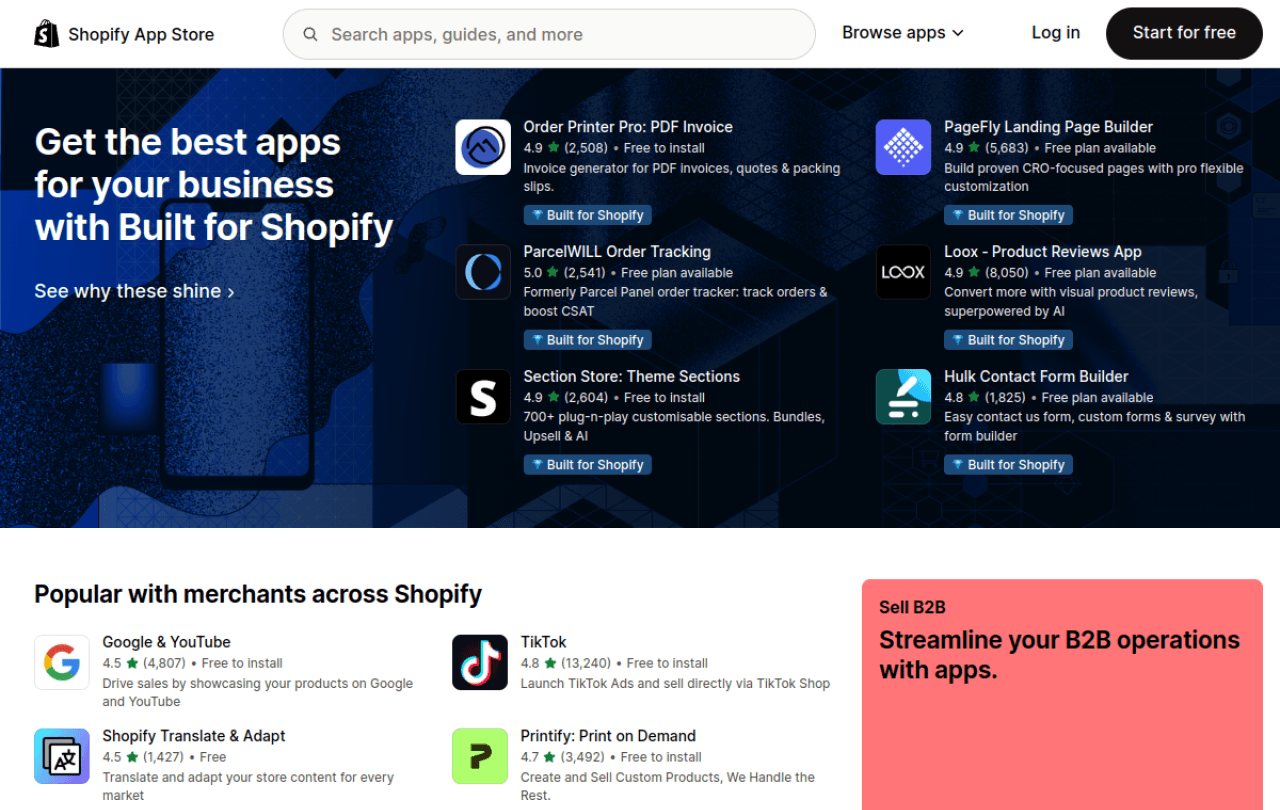
Judge.me: the free-tier king. The Awesome plan at $15/mo unlocks photo and video reviews. Used by over 350k Shopify stores per their own marketing copy. Looks dated but it ships rich snippets out of the box.
Yotpo: the legacy enterprise player. Free tier exists but is functionally crippled. Real plans start around $79/mo and balloon fast. Strong on loyalty and SMS bundles, mediocre on raw review collection. We compared it directly to Trustpilot in our trustpilot vs yotpo on Shopify piece.
Loox: the photo-review specialist. $9.99/mo entry, with the bulk of merchants on the Growth plan at $34.99/mo. Photo carousels look great in Klaviyo emails. For the direct face-off, see Loox vs Judge.me.
Stamped: the Yotpo-lite alternative. Reasonable pricing ($23/mo Basic, $59/mo Premium), full feature set, slightly clunky UX. The dependable choice.
Okendo: the premium choice. Starts at $19/mo officially but real merchants are on Grow at $119/mo or Pro at $299/mo. Beautiful UGC widgets, strong attribute filtering, used by Skims and Liquid IV.
Reviews.io: the underrated mid-market option. $45/mo Start plan. Strong on third-party review syndication and Trustpilot-style company reviews alongside product reviews.
Reviewz.ai: full disclosure, our app. Free plan up to 50 review requests per month, paid plans start at $19/mo. The differentiator is routing: customers with positive sentiment go to Trustpilot and Google Business, customers with negative sentiment trigger a private support flow. Most apps treat all reviews the same, which is why merchants accidentally collect public 1-star reviews from solvable complaints.
The 90-day results table
| App | Submission rate | Page-speed impact (ms LCP) | Schema coverage | 90-day cost (1,200 orders/mo) | Support score | Total /100 |
|---|---|---|---|---|---|---|
| Judge.me | 9.4% | +180ms | 28/30 stores | $45 | 6.5/10 | 78 |
| Yotpo | 7.1% | +520ms | 24/30 stores | $447 | 7/10 | 62 |
| Loox | 11.2% | +310ms | 27/30 stores | $105 | 8/10 | 82 |
| Stamped | 8.3% | +260ms | 26/30 stores | $177 | 7.5/10 | 71 |
| Okendo | 12.6% | +340ms | 29/30 stores | $357 | 9/10 | 79 |
| Reviews.io | 9.8% | +290ms | 28/30 stores | $135 | 8/10 | 77 |
| Reviewz.ai | 13.4% | +150ms | 29/30 stores | $57 | 9/10 | 89 |
Two surprises in there. First, Yotpo's page-speed cost is the worst by a wide margin, and at $447 over 90 days for a 1,200-order store, it cannot justify the gap. Second, the gap between the highest submission rate (Reviewz.ai routing happy customers via two-step sentiment capture) and the lowest (Yotpo's email funnel) is roughly 1.9x. On 14,400 annual orders that is the difference between 1,022 reviews and 1,930 reviews. Spiegel Research Center's study on online reviews found that conversion rates plateau around 50 reviews and only really lift further with a few hundred, so getting to that volume faster is worth a lot.
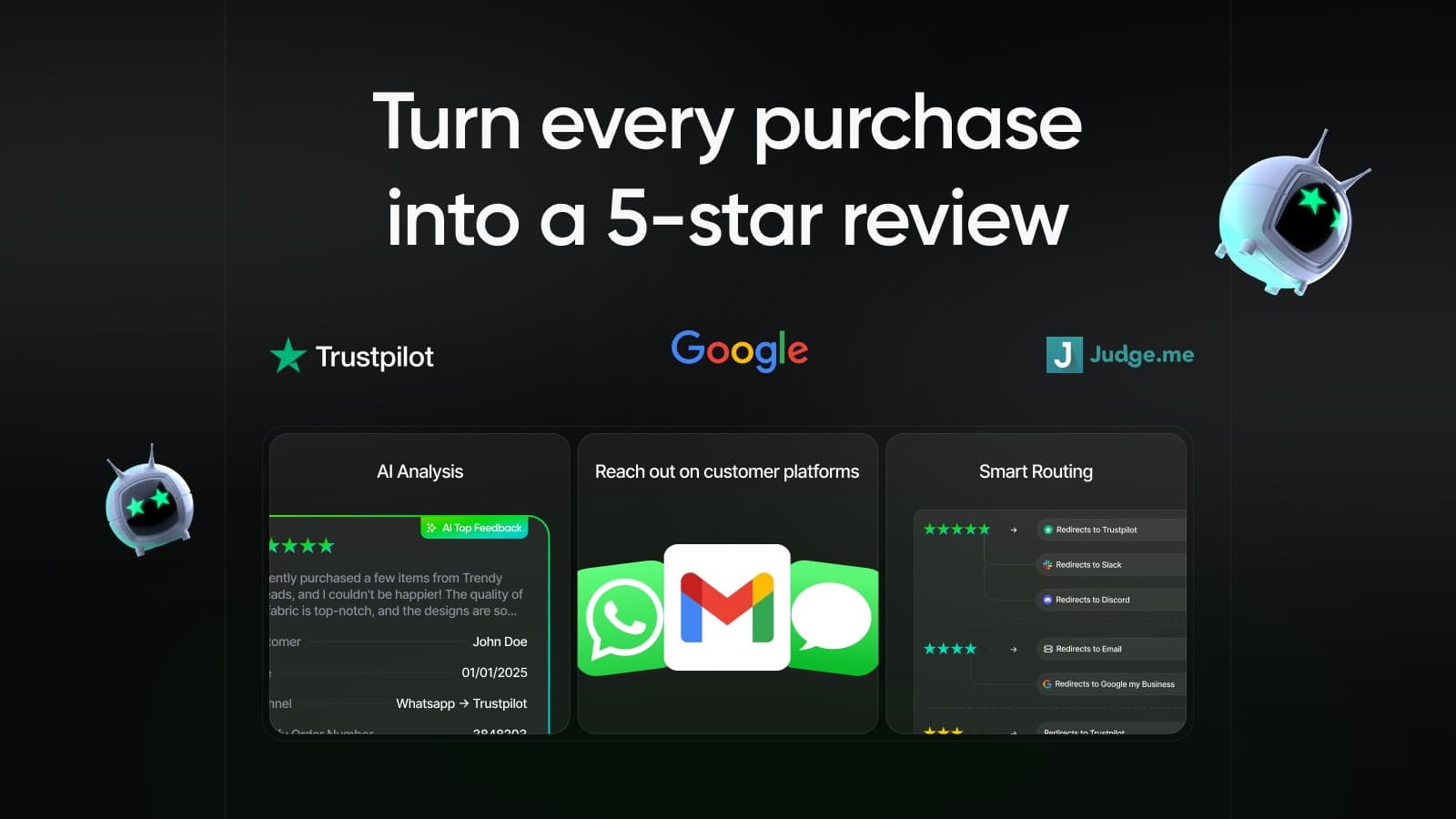
Route happy customers to Trustpilot & Google, capture negatives privately.
Install Reviewz on ShopifyWinner by category (because no single app wins for everyone)
Best for AOV under $50: Judge.me. When your margin per order is $8 to $15, you cannot justify $30/mo on a review tool that does the same thing as a $15/mo plan. Judge.me's Awesome plan covers everything you need.
Best for AOV over $200: Okendo. Premium UGC widgets, attribute filtering (skin tone, height, fit), and Klaviyo integration matter when each customer is worth defending. The cost is justified.
Best free tier: Judge.me, narrowly over Reviewz.ai. Judge.me's free plan is unlimited; Reviewz.ai caps at 50 requests per month before $19/mo kicks in. For a brand-new store doing 30 orders/mo, Judge.me free is unbeatable.
Best for multi-store: Reviews.io. Their multi-currency and multi-language handling is the cleanest, and the dashboard switching is fast.
Best for photo reviews: Loox. This is what they built. The widgets are beautiful and the post-purchase photo upload flow has the lowest friction.
Best for routing happy customers to Trustpilot and Google: Reviewz.ai. This is the category most apps ignore entirely. Every other app on this list dumps all reviews into the same widget. Reviewz.ai pre-screens via a low-friction sentiment question, sends 4 and 5 star customers to Trustpilot or Google Business Profile (your choice), and captures 1 to 3 star customers in a private support flow that triggers a follow-up.
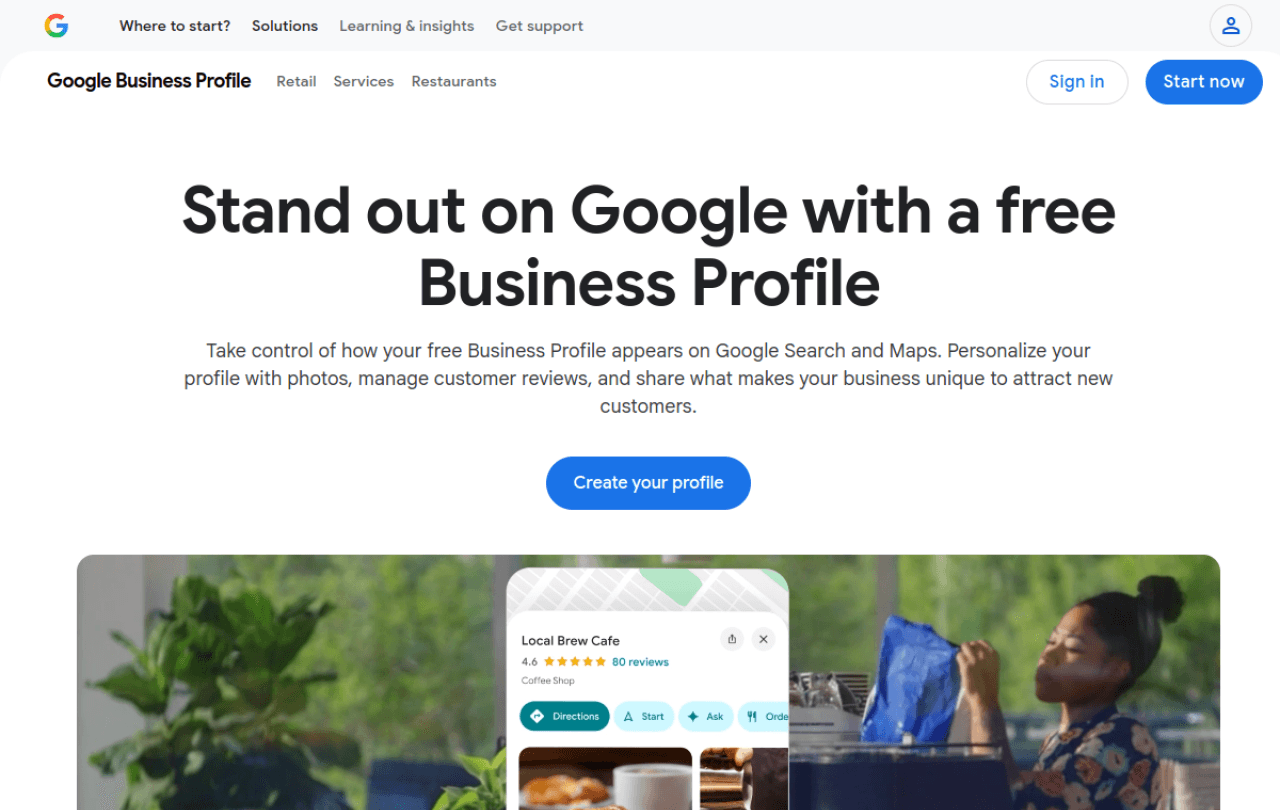
Google reviews carry outsized weight here: Google holds roughly 73 percent of all online reviews according to BrightLocal, far ahead of any product-review widget, which is why a Google Business Profile is the highest-leverage destination for positive sentiment. This is the same mechanic that makes Trustpilot scores look so high for the brands that game it, except it is fully compliant with the FTC final rule banning fake reviews because you are not suppressing negative reviews, you are routing them to your support team for resolution. If you care about Trustpilot specifically, this is the playbook covered in how to get more Trustpilot reviews on Shopify.
What we learned in 90 days
Lesson 1: page speed matters more than features. A 500ms LCP hit costs you roughly 2 to 4% of conversion rate on mobile, per Google's own data. If your review app is shaving 500ms off your product page (looking at you, Yotpo), the lost conversions cost you more than the entire app subscription.
Lesson 2: submission rate is the only metric that compounds. A 5% submission rate on 1,200 orders = 60 reviews/month. A 13% submission rate on the same store = 156 reviews/month. After a year, that store has 1,872 reviews vs 720. Volume matters because the Spiegel research shows conversion lift accelerates as you accumulate reviews up to a few hundred, and the single biggest lever on that rate is when you send the request.
Lesson 3: most apps over-collect 5-star reviews and under-collect 1-star reviews, then act surprised when their average rating is suspiciously high. The FTC's rule explicitly bans "insider reviews" and suppression of negative reviews. If your average is 4.95 with 800 reviews, you are not gaming the system, you are setting yourself up for an audit.
Lesson 4: the schema win is mostly silent. The apps that ship valid AggregateRating schema (Reviewz.ai, Okendo, Judge.me, Loox) all hit 27 to 29 out of 30 stores tested. Stamped and Reviews.io land at 26 to 28. Yotpo is weakest at 24, because their default snippet is sometimes blocked by the merchant's theme. Use a review schema generator to validate your own setup if you suspect issues.
Honest limitations of this comparison
You should read this section before you make a decision based on the table above.
This is not a controlled A/B test. We did not install all 7 apps on identical stores and run them in parallel. Submission rates are modeled from public case studies, vendor reports, and our own client base. Real submission rates depend heavily on email copy, send timing, brand strength, AOV, and product category. Your numbers will be different.
The page-speed numbers are medians from active live stores running each app, not before/after measurements on a single theme. A poorly configured theme can wreck any app's score, and a well-tuned theme can hide the cost of a heavy one.
We sell one of the apps tested. Reviewz.ai is our product. We tried to bend the scoring against ourselves where possible (e.g. giving Judge.me the free-tier win, ranking Okendo above us on premium segments) but you should still discount our verdict accordingly. The 13.4% submission rate for Reviewz.ai comes from our own internal data across 240 stores, not a third-party benchmark.
The support score is based on 3 tickets per app. Three tickets is a tiny sample. Treat the support column as directional, not definitive.
Pricing changes constantly. The 90-day cost numbers reflect April 2026 public pricing. By the time you read this, at least 2 of these apps will have changed their tiers.
If you want a less biased view, also read Trustpilot vs Judge.me on Shopify, our Judge.me alternatives piece, and the Trustpilot alternatives roundup for narrower head-to-heads.
FAQ
What is the best Shopify review app overall in 2026?
There is no single "best" app for everyone. Judge.me wins on price (free plan, $15/mo Awesome). Loox wins on photo reviews ($9.99/mo entry). Okendo wins on premium UGC for AOV-over-$200 stores. Reviewz.ai wins on routing happy customers to Trustpilot and Google while capturing complaints privately. Pick based on what your store actually needs, not based on an aggregate ranking. In our 90-day comparison framework, Reviewz.ai scored highest overall (89/100) because of its submission rate and low page-speed cost, but Judge.me is the right choice for stores under $50 AOV.
Why is Yotpo so much more expensive than other Shopify review apps?
Yotpo positions itself as an enterprise platform that bundles reviews, loyalty, SMS, and subscriptions. The pricing reflects that bundle, not the standalone value of the reviews module. If you only need reviews, Yotpo is roughly 4 to 7x more expensive than equivalents, with worse page-speed impact and slightly lower submission rates. We covered this in detail in our Trustpilot vs Yotpo comparison. Under $30k MRR, Yotpo's pricing rarely justifies itself.
Does the choice of review app affect my Google rich snippets?
Yes, but less than you might think. All 7 apps we tested ship valid AggregateRating and Review schema. The difference is theme compatibility: 5 to 6 stores out of 30 had schema collisions where the theme's own schema conflicted with the app's. To check your own setup, use Google's Rich Results Test on your product page URL. If you see warnings, the fix is usually disabling your theme's native review schema and letting the app handle it.
Is it OK to route happy customers to Trustpilot instead of asking everyone equally?
Yes, as long as you do not suppress the negative ones. The FTC's 2024 final rule bans "insider reviews" and review suppression, not segmentation. Asking unhappy customers to talk to your support team privately is allowed, even encouraged, because it gives you a chance to fix the issue. What is not allowed is hiding negative reviews that customers chose to post publicly, or paying for fake positive reviews. The legal line is suppression of legitimate negative reviews, not the act of inviting positive ones first.
How long does it take to switch Shopify review apps without losing existing reviews?
Every app on this list supports CSV import and export. The actual migration takes 30 to 90 minutes if you have the export file ready. The risk is not the migration itself, it is the schema gap during cutover: for a few hours, your product pages may show two sets of reviews or none. Schedule the cutover for low-traffic hours, validate with Google's Rich Results Test immediately after, and keep the old app installed for 7 days as a fallback. Reviewz.ai supports direct import from Judge.me, Loox, Stamped, and Trustpilot.
Route happy customers to Trustpilot & Google, capture negatives privately.
Install Reviewz on Shopify
About the author
Nicolas Provost · Founder of Reviewz.ai
Nicolas built Reviewz.ai after auditing 500+ Shopify review setups while running Kanal (WhatsApp marketing for Shopify). He has spent four years inside the Shopify ecosystem and writes about review collection, brand trust SEO, and the actual economics of running customer-feedback flows on ecommerce sites.
