

You can offer a discount for a review, but only if you offer it for an honest review regardless of whether it is positive or negative. The moment the discount is conditioned on a good rating, hidden, or used to suppress criticism, it crosses from compliant incentive into illegal review manipulation.
Incentivizing reviews is legal in the US and EU if you do it right: offer the reward for any honest review, never condition it on positive sentiment, and disclose that an incentive was given. What is banned is review-gating (only inviting happy customers), buying reviews, and suppressing negatives. The compliant way to protect your public rating is sentiment routing: ask everyone, send happy customers to public sites, and catch unhappy ones in a private feedback form so you fix the problem instead of hiding it.
The short answer
Offering a discount, loyalty points, a coupon, or entry into a giveaway in exchange for a review is allowed. Regulators do not ban incentives. They ban incentives that distort the honesty of reviews. The line is sentiment.
If your offer reads "leave a review, get 10% off," that is fine. If it reads "leave a 5-star review, get 10% off," that is a violation. The difference is one word, and it is the difference between a legal program and a fine.
What the FTC says
The US Federal Trade Commission tightened its position in 2024. Its final rule banning fake and deceptive reviews and its Endorsement Guides lay out what is and is not allowed. The relevant points for incentives:
- You may offer something of value for a review. Discounts, points, and free products are not prohibited.
- You may not condition the reward on the review being positive. Offering a benefit only for favorable reviews is explicitly a deceptive practice.
- You must disclose the incentive. If a reward was given, the review (or your collection program) should make that clear so readers can weigh it.
- You may not suppress or selectively publish. Withholding or burying honest negative reviews while showcasing positives is banned.
Penalties are real and can run into the tens of thousands of dollars per violation. We checked how exposed real stores are in our FTC review-rule audit of 50 Shopify stores, and most were quietly breaking at least one of these rules.
What the EU says (Omnibus Directive)
If you sell into the EU, the Omnibus Directive adds a parallel obligation. Traders must take reasonable, proportionate steps to verify that reviews come from real customers who actually bought or used the product, and must disclose whether and how they do so. The European Commission's guidance on consumer reviews treats fake reviews and undisclosed incentivized reviews as unfair commercial practices. Same spirit as the FTC: incentives are fine, deception is not, and you must be transparent.
The right way vs the wrong way
| Practice | Compliant? | Why |
|---|---|---|
| Discount for any honest review | Yes | Reward is not tied to sentiment |
| Discount only for 5-star reviews | No | Conditions reward on positive sentiment |
| Loyalty points for verified reviews, disclosed | Yes | Incentive disclosed, open to all customers |
| Only inviting happy customers to review (review-gating) | No | Selectively suppresses negative feedback |
| Asking everyone, routing unhappy ones to private form | Yes | Everyone can review; nothing public is suppressed |
| Buying reviews from a third party | No | Fake reviews, banned outright |
| Deleting honest 1-star reviews | No | Suppression of genuine feedback |
The throughline: incentivize the act of reviewing, never the content of the review, and never quietly filter who gets to be heard publicly.
Why review-gating is banned (and why people confuse it with routing)
Review-gating is the practice of asking customers how they feel first, then only inviting the happy ones to post a public review while quietly dropping the unhappy ones. Google has prohibited gating for years, and the FTC's stance on suppressing honest reviews makes it a clear violation. It manufactures an artificially positive rating by hiding dissatisfaction.
This trips merchants up because gating looks superficially similar to a compliant practice: sentiment routing. The distinction is what happens to the unhappy customer.
- Gating (banned): unhappy customer is silenced. Their feedback goes nowhere, and the brand pretends it never existed.
- Routing (compliant): unhappy customer is still heard. They are directed to a private feedback channel where the brand can actually resolve the issue, and they remain free to post a public review anywhere they like. Nothing is suppressed; you simply gave them a faster path to a human.
The difference is not cosmetic. With routing you are not blocking the public review, you are offering a better first option and fixing the underlying problem. We go deeper on handling the unhappy ones well in how to respond to negative reviews.
How Reviewz stays compliant by design
This is exactly the model Reviewz is built on. After a Shopify order, it asks every customer for feedback across WhatsApp, SMS, and email. Based on sentiment, it routes happy customers to leave a public review on Trustpilot, Google, or Judge.me, and routes unhappy customers to a private feedback form where you can make it right before they churn.
Critically, this is routing, not gating. The unhappy customer is never blocked from reviewing publicly; they are simply offered a direct line to support first. Everyone is asked, nothing honest is suppressed, and any incentive you attach applies to the act of reviewing rather than to a positive rating. That keeps the program on the right side of both the FTC and the Omnibus rules while still protecting your public score the legitimate way: by fixing problems instead of hiding them.
If you want the incentive itself to land, timing matters as much as the offer. See the best time to send a review request and our review request email templates for the mechanics.
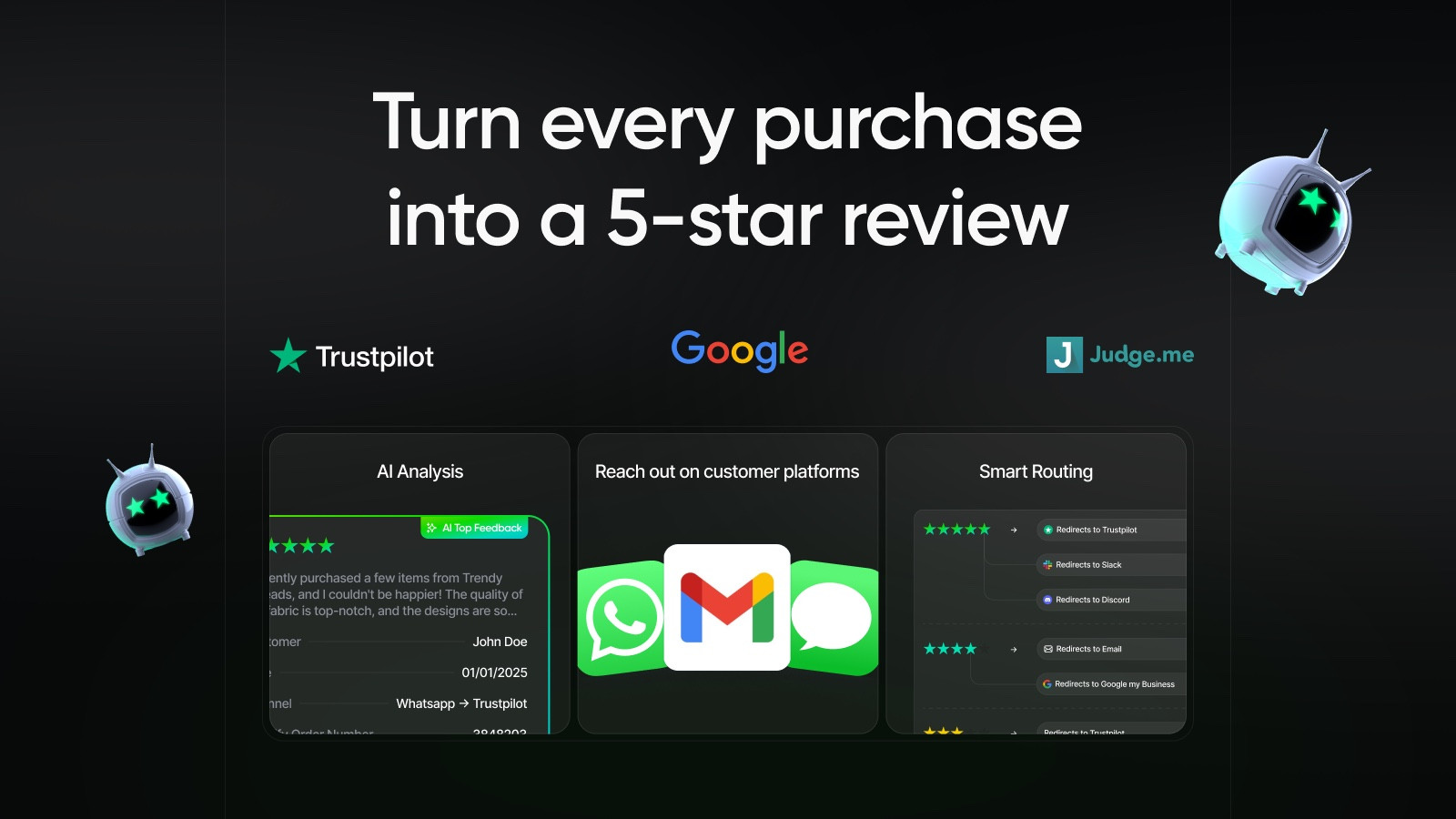 |
| Reviewz.ai for Shopify automatically routes happy customers to leave reviews on Trustpilot, Google, and Judge.me, while privately catching unhappy ones in a feedback portal before they post a public 1-star. Re-engage every reviewer with upsell offers via WhatsApp, email, and SMS. Install Reviewz on Shopify |
How to run a discount-for-reviews program correctly
If you decide to incentivize, here is the compliant checklist:
- Offer the reward for any review. Your wording should never mention a star count. "Share your honest review and get a coupon" is safe.
- Make it available to all customers. Do not pre-screen for happiness before extending the offer.
- Disclose the incentive. A short note in the request and ideally a badge on incentivized reviews keeps you transparent.
- Keep the reward modest. A small discount nudges participation without buying enthusiasm. A large reward can read as paying for praise.
- Verify the reviewer bought the product. Tie requests to real orders so reviews stay authentic and EU-verifiable.
- Never delete honest negatives. Respond to them instead.
Run any wall of glowing reviews through our free fake review checker if it ever looks suspiciously perfect, and read is Trustpilot legit for how platforms police incentivized reviews on their side.
Alternatives to discounts
Discounts are not the only lever, and sometimes not the best one. Incentives can subtly skew tone even when compliant. Alternatives that lift review volume without cash:
- Multi-channel asking. Most stores under-collect simply because email alone is ignored. Adding WhatsApp and SMS often does more for volume than any discount. The average review submission rate is low precisely because of single-channel requests.
- Better timing. Asking at the moment of delight (just after delivery, after a repeat purchase) beats asking too early or too late.
- Loyalty points instead of cash. Points feel like a thank-you and keep customers in your ecosystem.
- A frictionless flow. One tap to a pre-filled review form converts far better than a link to a login wall.
- Simply asking everyone. Volume is mostly an asking problem, not a bribing problem. We break down the broader case in why customer reviews are important.
The bottom line
Discounts for reviews are allowed when the reward is for honesty, not for praise. Tie it to the act of reviewing, open it to every customer, disclose it, and never suppress the negatives. If your goal is a healthy public rating, the durable way to get there is to ask everyone, route happy customers public, catch unhappy ones privately, and fix what they tell you. That is compliant, it is honest, and it outperforms any bribe over time.
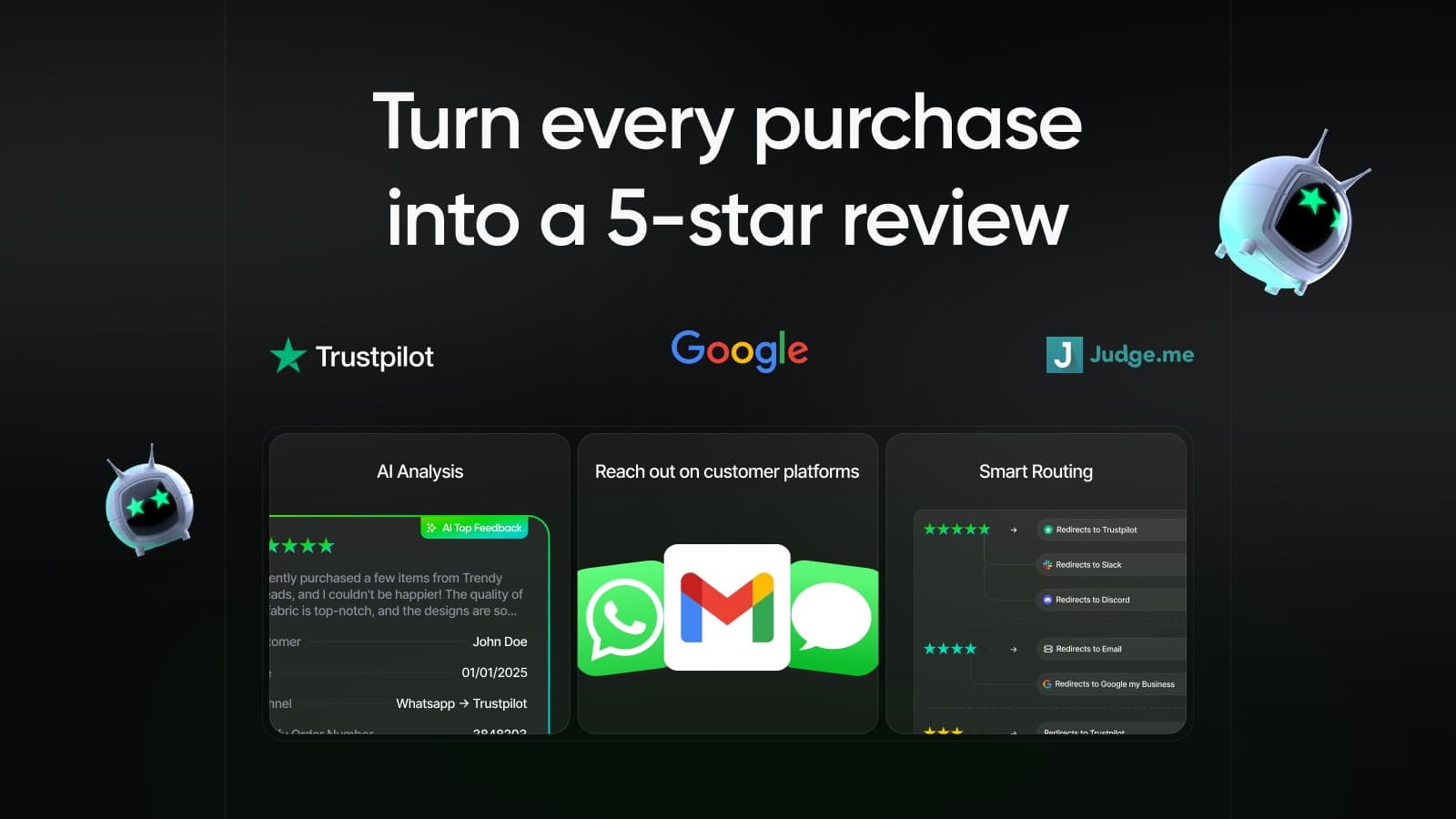
Route happy customers to Trustpilot & Google, capture negatives privately.
Install Reviewz on Shopify
About the author
Nicolas Provost · Founder of Reviewz.ai
Nicolas built Reviewz.ai after auditing 500+ Shopify review setups while running Kanal (WhatsApp marketing for Shopify). He has spent four years inside the Shopify ecosystem and writes about review collection, brand trust SEO, and the actual economics of running customer-feedback flows on ecommerce sites.
