

Testimonial advertising is when you put a real customer's words, face, or rating at the center of an ad instead of your own marketing copy. It works because shoppers trust other shoppers far more than they trust brands, and because a verified quote does the persuasion your headline cannot.
Testimonial ads turn customer reviews into the creative itself: UGC video, quote cards, star-rating ads, before/after, founder stories. They convert because social proof beats brand claims. The hard part is not designing the ad, it is sourcing a steady supply of honest, verified testimonials at scale and disclosing them correctly under the FTC rules. Collect reviews systematically first, then repurpose the best ones into ads.
What testimonial advertising actually is
A testimonial ad uses an authentic endorsement from a real customer as the primary creative. The customer is the spokesperson. Your job shrinks to framing their words well, adding context, and making sure the claim is honest and disclosed.
It sits apart from influencer marketing (paid creators with reach) and from plain review widgets on your product page. Testimonial advertising takes a review that already exists and promotes it: on Meta and TikTok feeds, in email, on landing pages, on packaging inserts, on out-of-home. The endorsement is the same; only the placement changes.
The reason it keeps outperforming polished brand creative is simple. People are skeptical of advertisers and trusting of peers. BrightLocal's consumer review survey consistently finds that the large majority of consumers read reviews before buying and treat them with weight close to a personal recommendation. The Spiegel Research Center at Northwestern found that displaying reviews can lift conversion rates substantially, with the largest jumps on higher-priced and higher-consideration products. A testimonial ad is just that effect, moved upstream into the part of the funnel where you are still buying attention.
Why testimonial ads convert
Three mechanisms are doing the work:
- Social proof. A stranger vouching for the product reduces perceived risk. The more specific and the more verified the voice, the stronger the effect.
- Concreteness. Customers describe outcomes you would never write yourself ("my dog stopped scratching in four days"). Specific beats superlative.
- Self-identification. When the person in the ad looks or sounds like the viewer, the viewer projects themselves into the result. This is why diverse, real-customer UGC outperforms a single studio model.
If you want the underlying data on why this matters across the whole store, we collected it in why customer reviews are important and the numbers in customer review statistics 2026.
18 testimonial advertising examples (by format)
Here are concrete formats you can ship. Most start from a single good review.
Quote-led formats
- Quote card. A single strong sentence in large type over a clean background, with the customer's first name and a verified badge. Cheapest format to produce, easy to A/B test at volume.
- Star-rating ad. Five gold stars plus a one-line quote. The rating does the heavy lifting in the first 0.5 seconds of a feed scroll.
- Review screenshot ad. A literal screenshot of a Trustpilot, Google, or Judge.me review, including the platform's UI. The native chrome reads as proof, not design.
- Aggregate proof ad. "4.8 stars from 3,412 reviews." Volume itself is the testimonial. See how many reviews a product needs for the count where this starts working.
- Highlight-reel carousel. A swipeable set of three to five short quotes, each on its own card, covering different objections (price, fit, shipping, results).
Video and UGC formats
- UGC unboxing. A customer films opening and first impressions on their phone. Raw beats polished here.
- Talking-head testimonial. Customer to camera, 15 to 30 seconds, describing the problem and the result. Caption it for sound-off feeds.
- Day-in-the-life. The product woven into a real routine, narrated by the user.
- Problem-solution story. Customer states the frustration, then shows the fix. Mirrors how shoppers actually search.
- Reaction stitch. On TikTok, stitch a customer's genuine reaction to first use.
Transformation and outcome formats
- Before/after. Two states side by side with the customer's own caption. Powerful for skincare, fitness, home, pets. Keep it honest and disclose any non-typical results.
- Timeline. "Day 1 vs Day 30," documented by the customer.
- Results card. A specific number a customer reported, attributed and dated.
Authority and story formats
- Founder-plus-customer. The founder reads or reacts to a real review on camera. Humanizes the brand and re-airs the testimonial.
- Expert testimonial. A qualified professional (vet, dermatologist, trainer) endorses, with credentials shown. Disclose any material connection.
- Niche-creator review. A micro-creator your audience already follows reviews honestly. Disclose the partnership.
Layered social-proof formats
- Social-proof carousel for retargeting. A stack of reviews aimed at warm traffic that already knows the product but hasn't bought.
- Wall-of-love landing page. Dozens of real reviews on the post-click page so the ad's promise is reinforced the moment they land. Pair it with strong on-page examples; we broke down what good ones look like in product review examples.
How to source testimonials at scale
This is the part most guides skip, and it is the whole game. A great testimonial-ad strategy dies without a steady inflow of fresh, honest, verified reviews to draw from. You cannot keep recycling the same three quotes.
The reliable approach is to build collection into your post-purchase flow rather than hoping reviews trickle in. After fulfillment, ask every customer for feedback through the channel they actually read. This is where Reviewz fits: it sends review requests across WhatsApp, SMS, and email, which lifts response rates well above email-only, then routes the verified reviews into Trustpilot, Google, and Judge.me where they become both display proof and raw material for ads. Sending matters as much as asking, so time it right using our notes on the best time to send a review request and the templates in our review request email guide.
A practical pipeline:
| Stage | What you do | Output for ads |
|---|---|---|
| Collect | Auto-request reviews post-purchase via WhatsApp / SMS / email | Volume of fresh, dated reviews |
| Filter | Route happy customers to public sites; catch unhappy ones privately | A clean pool of positive, public testimonials |
| Curate | Tag the most specific, objection-busting quotes | A shortlist mapped to ad angles |
| Produce | Drop quotes into quote cards, screenshot ads, UGC briefs | 10+ creatives from one collection cycle |
| Verify | Keep the original review on record with a permanent link | Proof you can show if a claim is challenged |
Before any testimonial goes into an ad, sanity-check that it is genuine. Recycling fabricated or purchased reviews into paid media is both a brand and a legal liability. Run quotes through our free fake review checker if a five-star wall ever feels too good to be true.
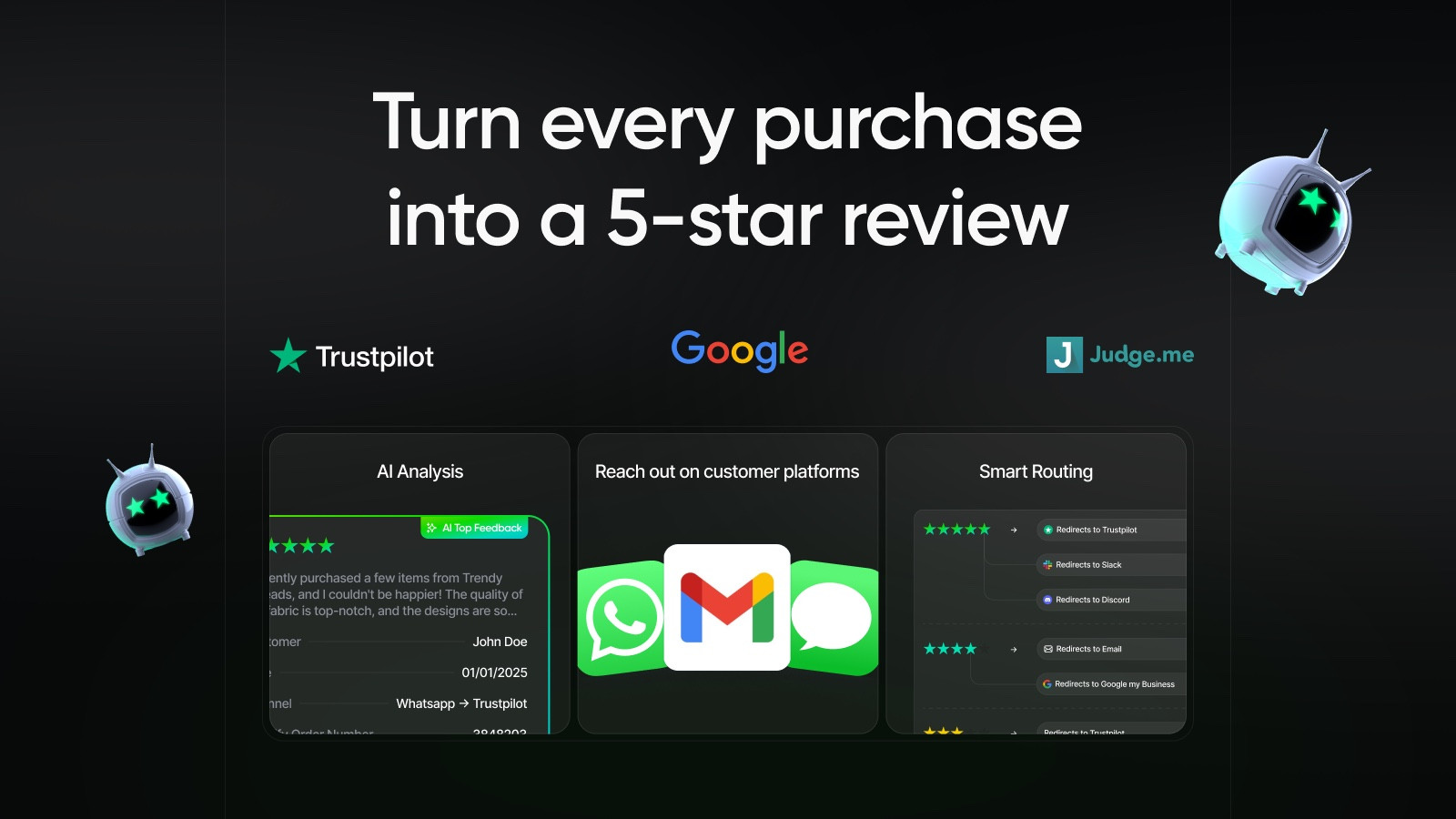 |
| Reviewz.ai for Shopify automatically routes happy customers to leave reviews on Trustpilot, Google, and Judge.me, while privately catching unhappy ones in a feedback portal before they post a public 1-star. Re-engage every reviewer with upsell offers via WhatsApp, email, and SMS. Install Reviewz on Shopify |
FTC disclosure rules for testimonial ads
Testimonial advertising is regulated, and the rules tightened in 2024 to 2025. The core principles from the FTC are not complicated, but they are enforced:
- Endorsements must reflect honest opinions and real experience. You cannot put words in a customer's mouth or use a testimonial for a product the person never used.
- Disclose material connections clearly and conspicuously. If you gave a free product, paid for the post, offered a discount, or have any other relationship that could affect the endorsement's credibility, say so. "Thanks [Brand] for the gift" buried in a hashtag stack is not enough.
- Non-typical results need context. A before/after showing an exceptional outcome should not imply it is what most customers get.
- No fake or purchased reviews, full stop. The FTC's rule banning fake and deceptive reviews makes buying reviews, suppressing honest negatives, and posting insider reviews without disclosure illegal, with monetary penalties. Read the FTC's Endorsement Guides for the detail.
We audited how few stores actually follow this in our FTC review-rule Shopify audit of 50 stores, and the short version is: most are exposed. The safe path is to use only genuine, verified reviews, keep the originals on record, and disclose any incentive plainly.
Putting it together
The brands winning with testimonial advertising are not the ones with the best designers. They are the ones with the deepest, freshest pool of honest reviews to draw from, and a system that keeps that pool filling. Build the collection engine first. The ads almost write themselves after that.
Start by turning every Shopify order into a review request across the channels your customers actually use, route the happy ones public, and you will never run out of testimonial material again.
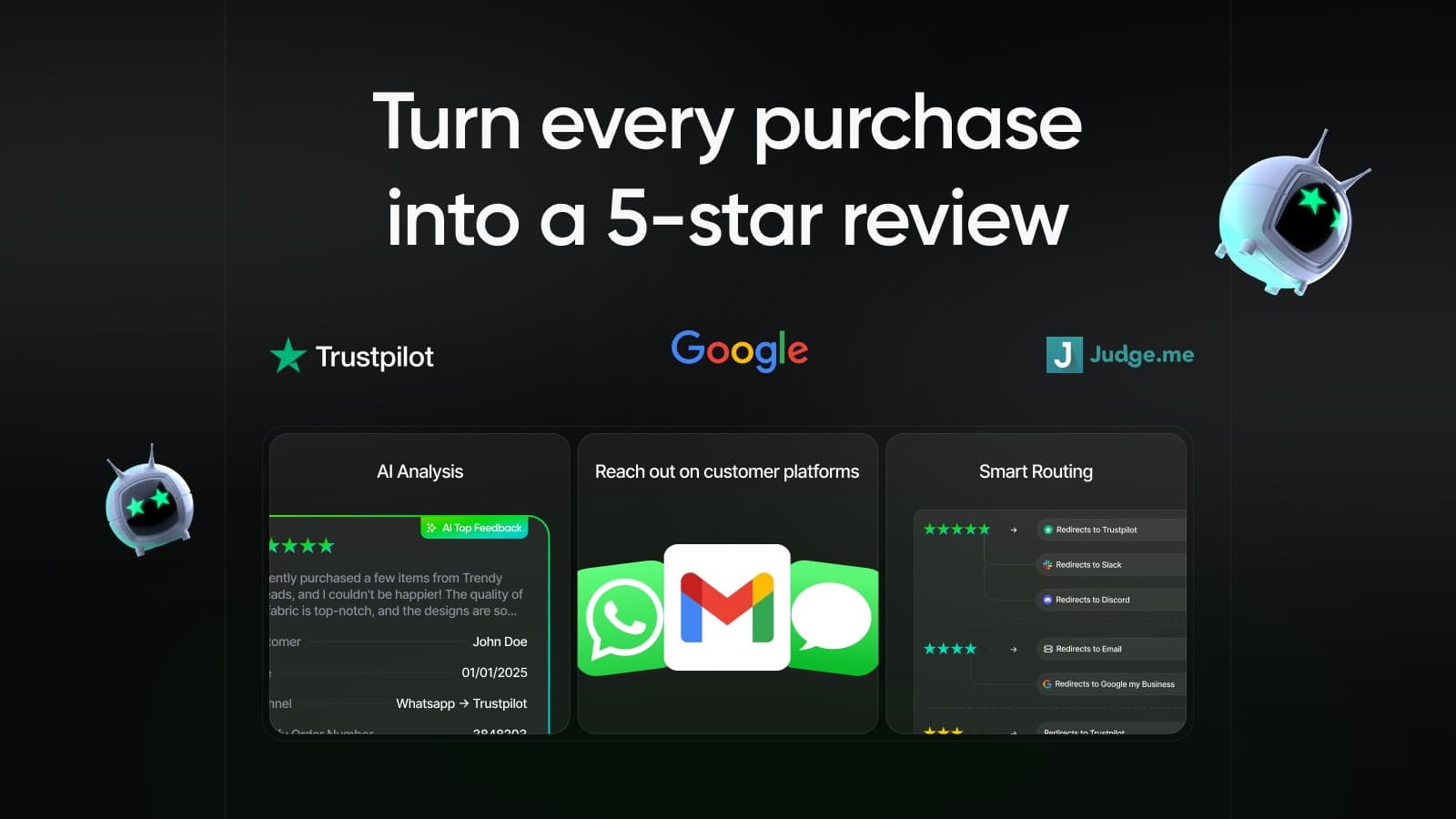
Route happy customers to Trustpilot & Google, capture negatives privately.
Install Reviewz on Shopify
About the author
Nicolas Provost · Founder of Reviewz.ai
Nicolas built Reviewz.ai after auditing 500+ Shopify review setups while running Kanal (WhatsApp marketing for Shopify). He has spent four years inside the Shopify ecosystem and writes about review collection, brand trust SEO, and the actual economics of running customer-feedback flows on ecommerce sites.
