

Yotpo to Reviewz migration takes 1-3 days. Cancel Yotpo first (60-90 day auto-renewal notice required). Export reviews to CSV. Import to Reviewz. Configure NPS routing + multi-platform invites. Swap widgets. Typical savings: $10,000-$13,000/year for mid-market merchants. Watch for SKU mismatches, Klaviyo event re-mapping, and photo URL expiration. Don't uninstall Yotpo until parallel-run shows Reviewz data is complete and verified.
Why merchants migrate from Yotpo
From talking to 50+ merchants who left Yotpo in the last 12 months, the reasons cluster into three: price escalation at renewal (typical jump: $499/month → $899/month at year 2), complexity overhead for stores not using the full bundle, and contract lock-in blocking experimentation. We covered these in our Yotpo alternatives guide.
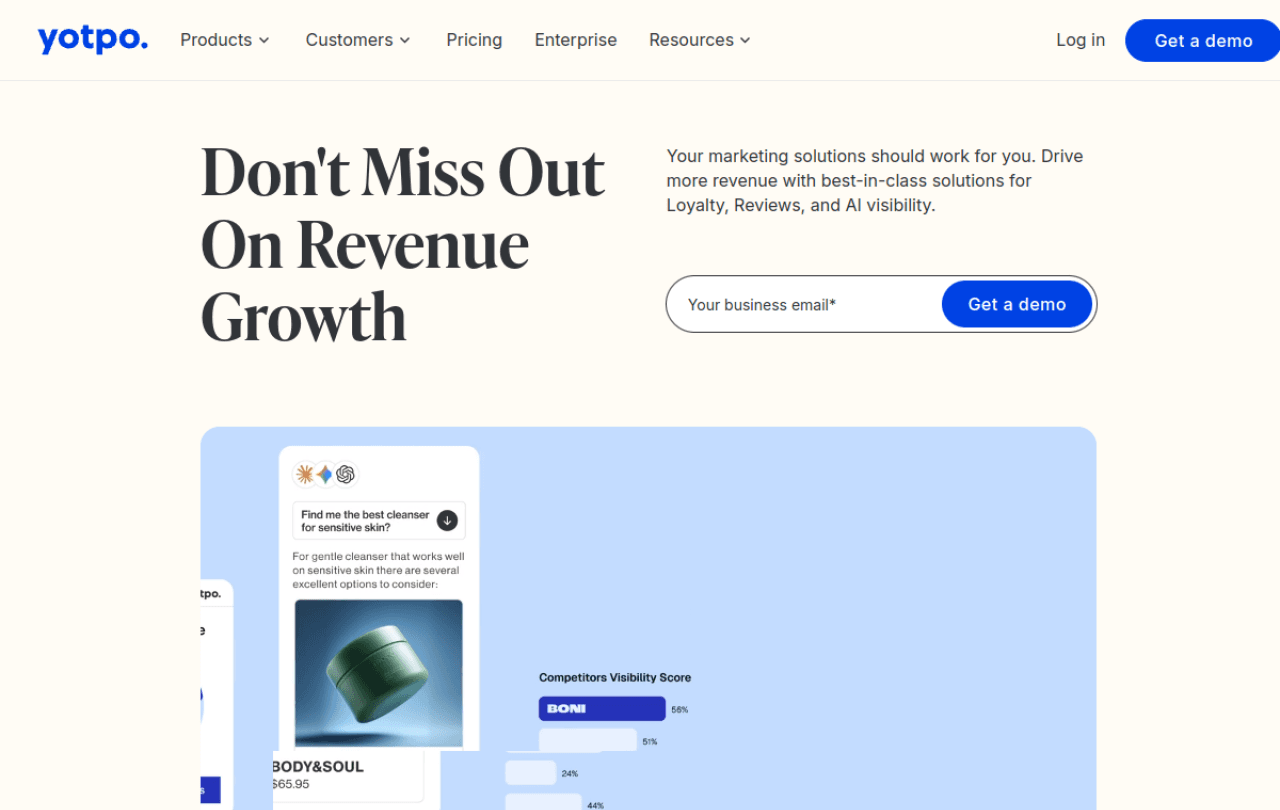
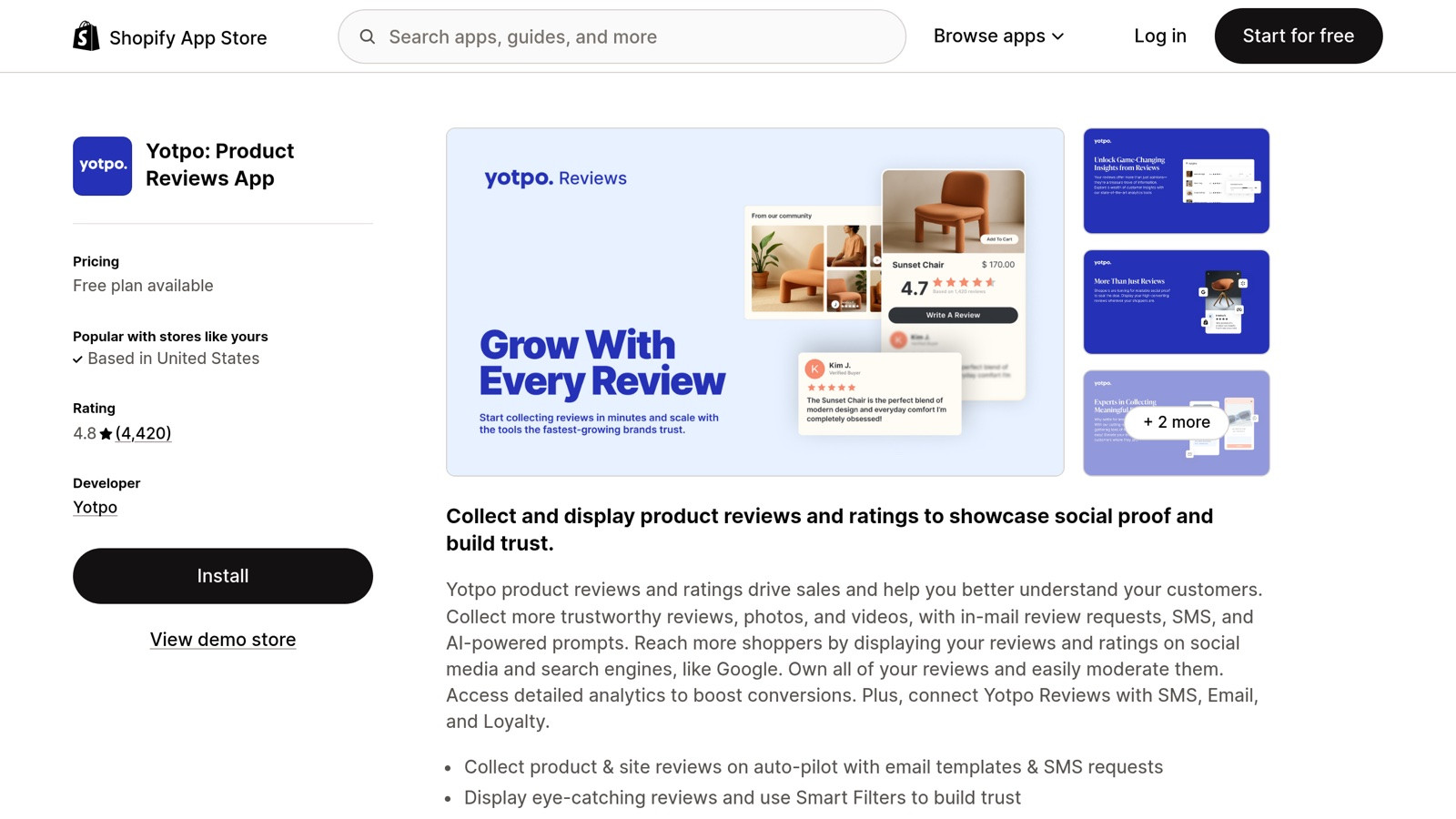
Yotpo on the Shopify App Store, bundled reviews + loyalty + SMS marketing, best for $5M+ ARR brands.
This guide is for merchants who've already decided to switch. It's the operational playbook. If you're still on the fence, the head-to-head in Reviewz vs Yotpo lays out the trade-offs, and our roundup of the best Shopify review apps covers the wider field.
Pre-migration checklist (do these BEFORE touching anything)
- Find your Yotpo contract end date. In Yotpo admin → Settings → Subscription. Note the auto-renewal cancellation deadline (typically 60-90 days before end date).
- Send the cancellation notice in writing. Email your Yotpo CSM AND post a ticket in Yotpo support. Document with timestamps. Yotpo has been known to claim cancellation wasn't received; written record protects you.
- Export your reviews to CSV. Yotpo admin → Reviews → Export → All reviews. Keep this file safe; you'll need it for the import.
- Document your widget locations. Where on your Shopify theme do Yotpo widgets appear? Product page, collection page, footer? Screenshot each one.
- Audit your active integrations. Yotpo connects to Klaviyo, Attentive, Smile.io, etc. Note which integrations need re-wiring after migration.
The migration: step-by-step
Step 1: Install Reviewz (5 minutes)
Install Reviewz on the Shopify App Store. The free plan handles the migration; you can stay on free or upgrade later.
Step 2: Import your Yotpo CSV (10-30 minutes)
In Reviewz admin → Settings → Import → Yotpo CSV. Upload the file you exported from Yotpo. Reviewz parses Yotpo's native CSV format including:
- Review text + rating
- Customer name + email + verified-purchase status
- Original review timestamps
- Photos and videos (re-hosted on Reviewz CDN)
- Product SKU mappings
For 1,000-5,000 reviews, expect 5-15 minutes for the import to process. Photos take longer (re-hosting from Yotpo URLs to your CDN).
Step 3: Verify product ID mappings
Yotpo and Reviewz both map reviews to Shopify products by product ID, but Yotpo also stores SKU-based mappings. After import, check your top 10 products in Reviewz admin and confirm review counts match what Yotpo showed. Mismatches usually mean SKU changes happened during your time on Yotpo; manually re-map those.
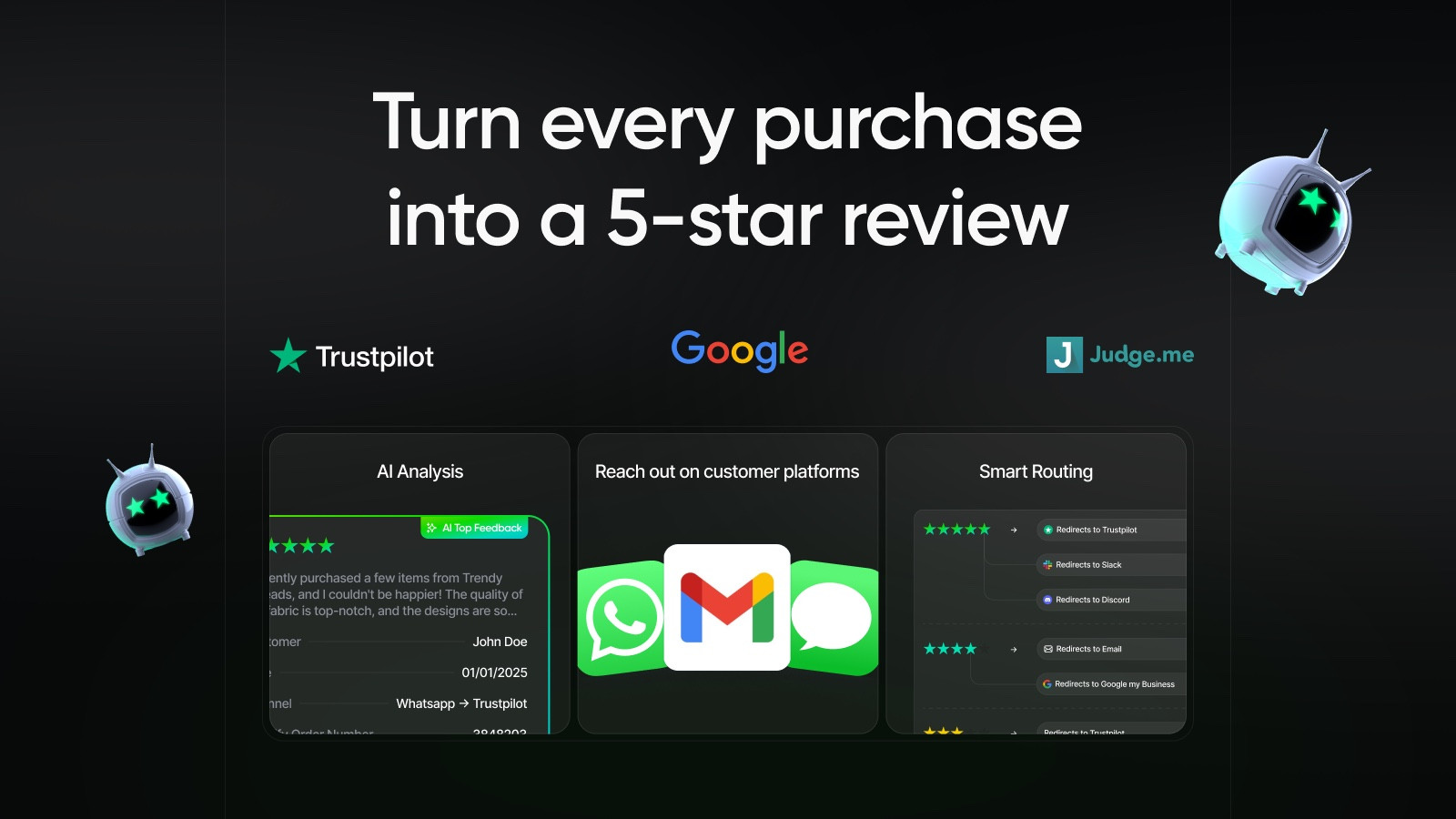 |
| Reviewz.ai for Shopify automatically routes happy customers to leave reviews on Trustpilot, Google, and Judge.me, while privately catching unhappy ones in a feedback portal before they post a public 1-star. Re-engage every reviewer with upsell offers via WhatsApp, email, and SMS. Install Reviewz on Shopify |
Step 4: Configure the workflow
Yotpo's post-purchase email sequence sent invites at fixed intervals. Reviewz uses NPS pre-filtering: a survey first, then routing. Set this up:
- NPS survey timing: 7-14 days post-delivery (matches your product type, see our review request email guide and the data on the best time to send a review request for category-specific timing).
- Promoter routing: 9-10 scores get routed to leave a public review on the platform of your choice. If you previously sent all reviews to Yotpo on-site only, consider routing to Trustpilot for brand-level credibility OR Judge.me free for unlimited collection (if you're moving directly between those, see how to migrate from Yotpo to Judge.me).
- Detractor handling: 0-6 scores hit a private feedback portal. You see the issue, can resolve it, and only after resolution does the customer get re-invited to leave a public review.
- Channels: enable WhatsApp + email. WhatsApp lifts response rates 2-3x for the same audience. Kanal's guide on WhatsApp automation covers the playbook.
Step 5: Swap the storefront widgets
This is the longest step technically. Yotpo widgets are usually embedded as Liquid sections or app blocks. Reviewz uses Shopify Theme App Extensions, so adding Reviewz widgets is drag-and-drop in the Theme Editor.
For each Yotpo widget location:
- Note the widget type (product reviews, star rating, carousel, etc.)
- Add the equivalent Reviewz block via Theme Editor
- Test on staging if possible (most stores skip this, small risk acceptable for the time saved)
- Once verified, remove the Yotpo Liquid section
Pro tip: keep both widgets visible for 2-3 days during the transition. Compare the data; if anything's off, you have time to fix it.
Step 6: Re-wire integrations (Klaviyo, etc.)
If you used Yotpo's Klaviyo integration to push review events into email flows, you'll need to re-create those flows pointing to Reviewz events. Reviewz supports Klaviyo natively, under Settings → Integrations → Klaviyo → Connect.
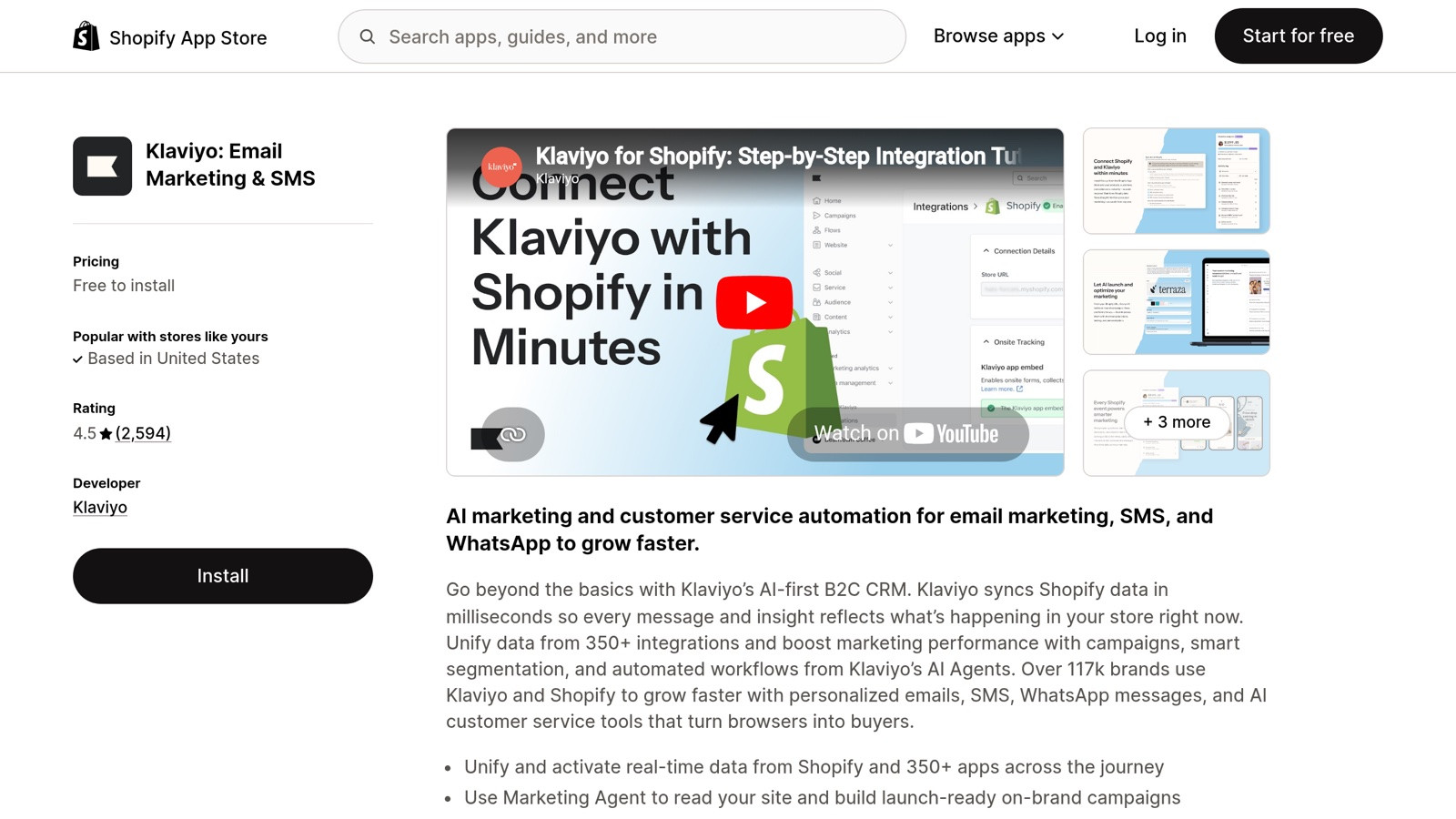
Klaviyo on the Shopify App Store, most-installed email/SMS platform, integrates natively with most review tools.
Step 7: Final verification + Yotpo uninstall
After 1-2 days of running in parallel:
- Confirm all imported reviews display correctly on product pages
- Confirm NPS surveys are being sent for new orders
- Confirm Klaviyo events are firing
- Confirm widget rendering on mobile (often where issues hide)
If everything checks out, uninstall Yotpo from Shopify Apps. Note: Yotpo will continue to bill you until your contract end date, regardless of uninstall.
The 5 gotchas that cost merchants the most time
| Gotcha | Impact | Fix |
|---|---|---|
| Missing Yotpo cancellation window | Locked in another year | Check end date NOW; document cancellation in writing |
| SKU vs product ID mismatches | Reviews show on wrong products | Manual remap top 20 products post-import |
| Photo URLs expiring | Old reviews lose photos | Reviewz re-hosts on import; verify within 7 days |
| Klaviyo event mismatches | Review-triggered email flows break | Rebuild flows with Reviewz events, test with sample order |
| Widget styling drift | Brand consistency loss | Use Reviewz default widgets first; customize after migration is complete |
|
| Reviewz.ai for Shopify automatically routes happy customers to leave reviews on Trustpilot, Google, and Judge.me, while privately catching unhappy ones in a feedback portal before they post a public 1-star. Re-engage every reviewer with upsell offers via WhatsApp, email, and SMS. Install Reviewz on Shopify |
Cost comparison: before and after
Worked example for a typical mid-market Shopify store doing 5,000 orders/month:
- Before: Yotpo Premium at $1,099/month = $13,188/year
- After: Reviewz free + Trustpilot free + Judge.me free = $0/month, $0/year
- Or: Reviewz free + Trustpilot Standard + Judge.me free = $250/month = $3,000/year
- Savings: $10,000-$13,000/year
Migration time investment: 1-3 days. ROI: same year.
What you give up
Honest disclosure: leaving Yotpo means leaving their loyalty program. If you ran point-based or tiered loyalty through Yotpo, that doesn't come over. Smile.io ($49/month) is the most common standalone loyalty replacement.
You also lose Yotpo's SMS marketing if you used it. Klaviyo SMS or Attentive are the typical replacements.
References:
- Reviewz on Shopify App Store. Link
- Yotpo data export documentation. Link
- Smile.io standalone loyalty pricing. Link
- Shopify App Store: Yotpo Reviews listing. Link
- Shopify App Store: review apps category. Link

About the author
Nicolas Provost · Founder of Reviewz.ai
Nicolas built Reviewz.ai after auditing 500+ Shopify review setups while running Kanal (WhatsApp marketing for Shopify). He has spent four years inside the Shopify ecosystem and writes about review collection, brand trust SEO, and the actual economics of running customer-feedback flows on ecommerce sites.
